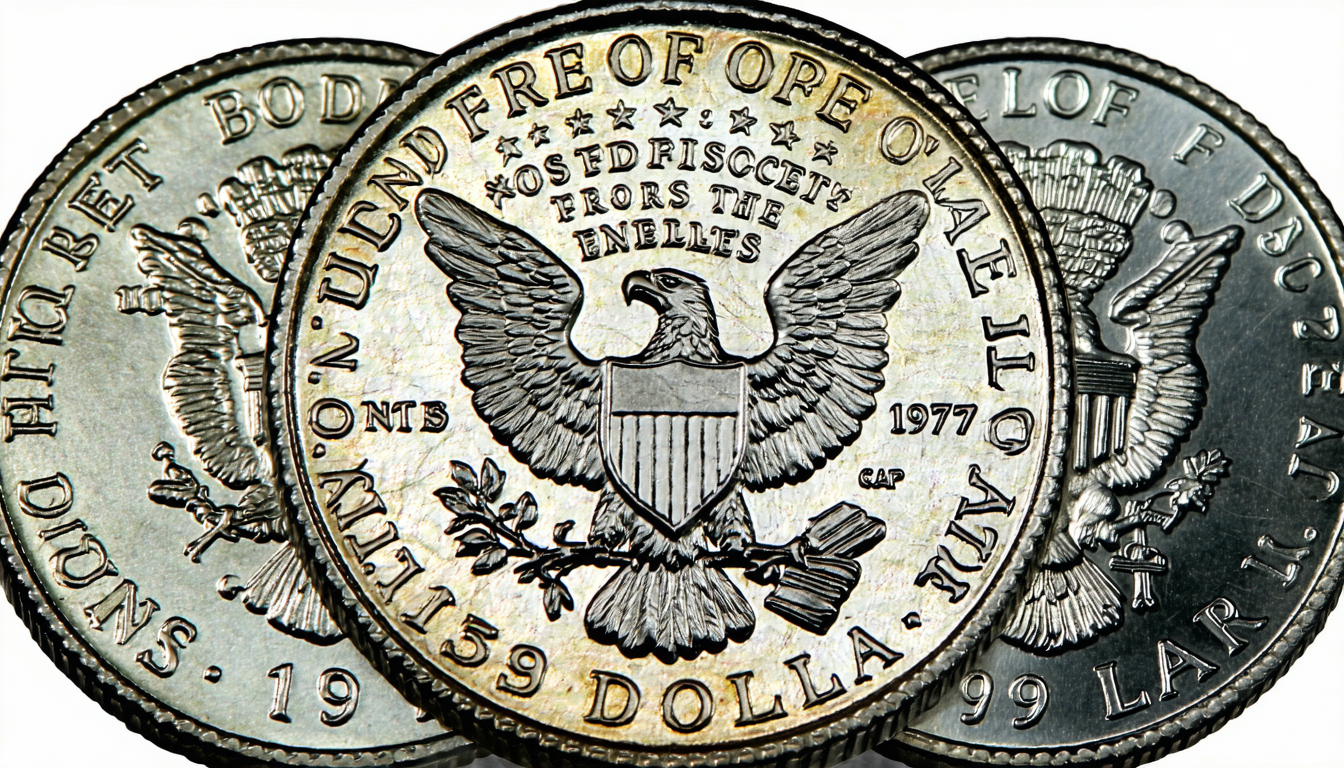
The 1979 dollar coin—better known as the Susan B. Anthony dollar—occupies a unique space in modern numismatics. Designed as a smaller, more cost-effective replacement for both the Eisenhower dollar and the one-dollar bill, it ultimately met with public resistance thanks to its close resemblance to the quarter—and today, that very rejection and scarcity in certain forms drive its collector appeal (coins-value.com). Beyond that, rare varieties and high-grade specimens command prices far above face value, creating hidden treasures for those who look closely enough.
Collecting isn’t just about mint marks—it’s also about mistakes that slipped through quality control. Several error types significantly boost value for the 1979 dollar:
Two forces propel the 1979 dollar coin’s modern market:
Scarcity by design: The Wide Rim and Type 2 Proof were produced during limited windows, making them rare from the outset. That rarity, paired with collector demand, sustains high values (coins-value.com).
Collector-driven pricing dynamics: Top-tier registry collectors chase high-grade specimens, especially Wide Rim and Type 2 proofs. Price guides show wide variance, reflecting volatility and niche appeal. As one expert noted:
“Market prices for top‑grade business strikes have experienced dramatic shifts, with auction records varying widely depending on registry demand and timing.” (coins-value.com)
This sentiment highlights how market timing and collector trends can shape value as much as rarity.
Here’s a cheat‑sheet for coin spotting:
The 1979 Susan B. Anthony dollar isn’t just “worth a buck.” It’s a dynamic story of design tweaks, collector psychology, and accidental rarity. Whether you’re casually digging through coin rolls or holding a potential gem, knowing the differences—Wide vs. Narrow rim, Type 1 vs. Type 2 proof, and spotting errors—can transform a coin from mundane to potentially thousands of dollars. Patience, sharp eyes, and a bit of luck can pay off.
Is the 1979 Susan B. Anthony coin still worth more than $1?
Only in rare cases—most 1979 dollars remain at or near face value, unless they’re Wide Rim, Type 2 proof, or high-grade collectibles.
How can I tell if my coin is the Wide Rim variety?
Look at the date’s distance from the rim. If the digits are almost touching the edge, you’ve likely found the Near Date Wide Rim—worth inspecting further.
What’s the difference between Type 1 and Type 2 proof coins?
Type 1 features a blob-like “S,” while Type 2’s “S” is sharp and serifed. Type 2 proofs are rarer and consequently more valuable.
Could nearby overstrikes or minting errors make my coin valuable?
Absolutely—off-center strikes, clipped planchets, and especially overstrikes on older coin planchets can bring outsized collector interest and big premiums.
Bitania Emerges as TradeOgre Alternative with Launch of No-KYC Crypto Exchange
Blockchain games offer the promise of a simple vision: everyone, everywhere can play, own, and…
While most platforms are busy pushing roses and heart-shaped bonuses, one online casino is taking…
Cryptocurrency trading can feel like a roller‐coaster sometimes—sure, there's that adrenaline rush when BTC jumps…
Pepe Coin, riding the crest of meme culture, is proving that sometimes hype and humor…
Cryptocurrency trading often feels like stepping into... well, a slightly chaotic, thrilling bazaar. Prices shift,…
This website uses cookies.