


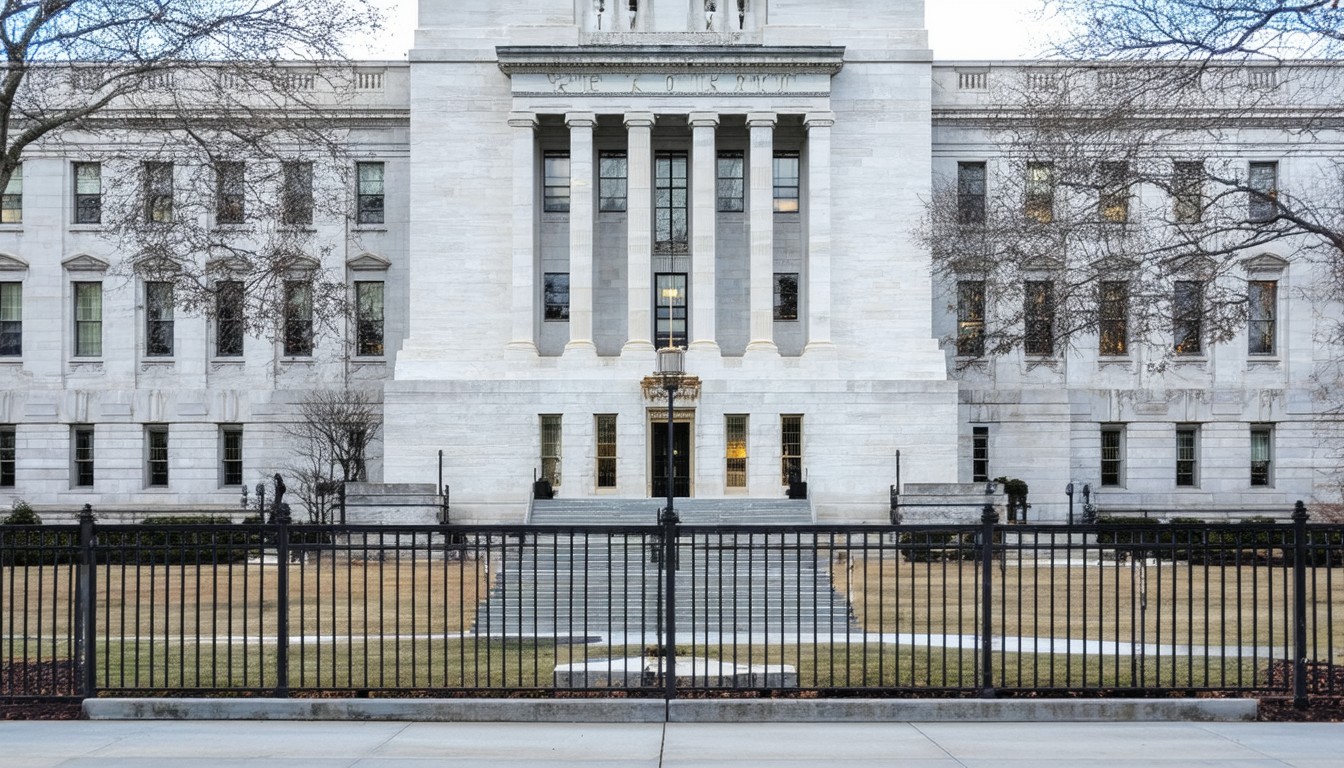
The Federal Open Market Committee (FOMC) may not be a household name, but its influence on the global economy is hard to overstate. As the policymaking arm of the Federal Reserve, the FOMC’s decisions reverberate through financial markets, affect interest rates for households and businesses, and play a pivotal role in the overall health of the U.S. and world economies. When Wall Street analysts, policymakers, and traders anxiously await “Fed Day,” they're closely tracking every signal and statement from the FOMC.
What Is the FOMC and Why Does It Matter?
The FOMC is the branch of the Federal Reserve System tasked with setting monetary policy, specifically targeting short-term interest rates and the nation’s money supply. The committee convenes eight scheduled times a year—and sometimes more in urgent circumstances—to assess economic conditions and determine the path of federal funds rates, a benchmark that influences everything from mortgage rates to credit card interest.
Structure of the FOMC
Comprised of twelve voting members, the FOMC includes:
- Seven members of the Federal Reserve Board of Governors
- The President of the Federal Reserve Bank of New York (always a voting member)
- Four of the remaining eleven regional Reserve Bank presidents, who rotate as voting members
This structure balances regional viewpoints across the U.S., helping the committee shape policies that serve the national economic interest. Non-voting presidents also participate in discussions, providing insights from their districts.
FOMC: Process and Communication
The Meeting Cycle
FOMC meetings are meticulously planned, often beginning with comprehensive economic briefings. Members evaluate macroeconomic indicators such as inflation, employment, consumer spending, and global financial developments. Leading into each meeting, market participants pore over data releases—like the Consumer Price Index (CPI) and jobs reports—speculating on how these will influence the committee’s decisions.
Post-Meeting Statements and Forward Guidance
After the meeting, the FOMC releases a statement summarizing its policy decisions and economic outlook. In recent years, the committee has placed greater emphasis on communication and forward guidance, aiming to steer market expectations and reduce uncertainty.
"Central bank communication has become one of the most important tools in monetary policy," notes Dr. Ethan Roberts, chief economist at a global investment research firm. "Markets move as much on carefully chosen language as on rate changes themselves."
Several weeks after meetings, the Fed releases detailed minutes that provide deeper insights into committee deliberations.
Key Indicators and Tools: What the FOMC Watches
Data-Driven Decision Making
The FOMC relies on a plethora of economic indicators to guide its policy stance:
- Inflation: Measured primarily by the CPI and the Personal Consumption Expenditures (PCE) index.
- Labor Market Health: Assessed using unemployment rates, payroll growth numbers, and labor participation rates.
- GDP growth: Provides a view of overall economic momentum.
- Global Trends: External shocks—like the COVID-19 pandemic or energy price spikes—are incorporated into risk assessment.
Beyond economic indicators, the FOMC monitors financial market conditions, credit availability, and geopolitical risks.
Policy Tools at the Committee’s Disposal
The main lever for the FOMC is the federal funds rate: the interest rate at which banks lend reserves to other banks overnight. Changes in this rate ripple outward, affecting consumer borrowing costs, lending standards, and asset values. During the 2008 financial crisis and the COVID-19 shock, the FOMC deployed unconventional tools such as quantitative easing (QE) to stimulate economic activity and ensure liquidity.
FOMC Decisions and Their Market Impact
Anticipation and Volatility Ahead of Announcements
Financial markets often respond not only to the FOMC’s actual decisions but to the perceived tone and direction of its communications. In the 2020–2022 period, for example, global asset prices surged as the FOMC slashed rates and launched massive bond-buying programs to counteract COVID-induced economic shocks. Subsequently, concerns over inflation led to a cycle of rapid rate hikes, with equity and bond markets experiencing heightened volatility.
Case Study: The “Taper Tantrum”
A notable illustration came in 2013 when former Fed Chair Ben Bernanke signaled the eventual winding down (“tapering”) of QE. The mere mention triggered a global sell-off in bonds and emerging market currencies, underscoring the outsized influence of FOMC language.
Short- and Long-Term Implications
- Short-term: Markets may see sharp swings in treasury yields, equity indexes, and currency values on FOMC announcement days.
- Long-term: Policy direction can stoke or cool economic activity, influence employment trends, and alter corporate investment plans.
For instance, a dovish FOMC stance—favoring lower interest rates—often bolsters stocks and risks asset prices. Conversely, hawkish signals (favoring rate increases) can dampen borrowing and spending, slowing economic growth.
The Evolving Role of the FOMC in a Changing World
Today’s FOMC faces a range of unprecedented challenges—from managing inflationary pressures amid global supply disruptions to adapting to new technologies that reshape payment systems and banking. The committee is also increasingly pressed to address social and environmental factors, carefully balancing its dual mandate of maximum employment and stable prices.
Looking ahead, the transparency and adaptability of the FOMC will remain central to sustaining confidence among investors, businesses, and ordinary consumers. As economic shocks grow more complex and globally interconnected, the committee’s actions—and words—will continue to set the tone for markets worldwide.
Conclusion
The FOMC stands at the heart of U.S. and global monetary policy, exerting enormous influence through its rate decisions and communications. Its careful balancing act—navigating inflation, employment, and financial stability—demands rigorous analysis, open debate, and clear messaging. For market participants and policymakers alike, following the FOMC’s decisions offers critical insights into the health of the economy and the likely trajectory of interest rates and asset prices. Staying attuned to its evolving role and signals is essential for anyone seeking to navigate today's financial landscape.
FAQs
What does FOMC stand for?
FOMC stands for the Federal Open Market Committee, the branch of the Federal Reserve responsible for setting U.S. monetary policy.
How often does the FOMC meet?
The FOMC holds eight scheduled meetings each year, though it can meet more frequently during periods of market stress or crisis.
Why do markets react strongly to FOMC statements?
Financial markets are highly sensitive to changes in interest rates and Fed policy. The FOMC’s statements signal likely future moves, which shape investment and borrowing decisions worldwide.
How does the FOMC affect everyday consumers?
FOMC decisions directly influence interest rates on mortgages, credit cards, auto loans, and savings accounts, impacting day-to-day borrowing and spending costs for households.
What is the “federal funds rate”?
The federal funds rate is the interest rate at which banks lend reserves to each other overnight. It serves as the primary tool the FOMC uses to guide monetary policy.
Who sits on the FOMC?
The committee consists of the seven members of the Federal Reserve Board of Governors, the New York Fed president, and four rotating regional Fed Bank presidents. Non-voting presidents also attend and participate in meetings.










Leave a comment