



Introduction: A Sudden Slide in Crypto Confidence
The crypto market is navigating a rough patch as of Monday, January 26, 2026. Recent data highlights a noticeable retreat across the board: virtually all major coins are in the red, liquidations are mounting, and macro forces are pressuring the space. While this isn't necessarily unprecedented, the confluence of technical, regulatory, and geopolitical factors makes for a compelling—and cautionary—narrative.
Current Market Overview: Numbers and Nuance
Crypto Downtrend Snapshot
- The total cryptocurrency market capitalization has slipped by about 0.8% within the last 24 hours, resting near $3.05 trillion. During that period, 93 out of the top 100 coins have declined, with Bitcoin down 0.7% (around $87,860) and Ethereum falling 1.5% (near $2,892) (cryptonews.com).
- Macro uncertainty has triggered over $550 million in leveraged liquidations, especially affecting long positions in Bitcoin and Ethereum (cryptonews.com).
Market Sentiment and ETF Flows
- Crypto market sentiment remains firmly in the “fear zone,” continuing a slide from neutral levels (cryptonews.com).
- U.S. Spot Bitcoin ETFs recorded around $103 million in outflows, while Ethereum ETFs saw $41 million exit, signaling a retreat by institutional investors (cryptonews.com).
Driving Forces Behind the Downturn
Geopolitics and Economic Anxiety
- Heightened geopolitical tension—particularly triggered by U.S. President Trump’s tariff threats over Greenland—has rattled global markets. Gold and silver are rallying, while crypto assets attract defense selling (news.com.au).
- This risk-off sentiment spilled over into equity markets as well. In fact, the U.S. stock market suffered a dramatic one-day drop on January 20, 2026—its worst since October 2025—spurred by similar tariff escalations (en.wikipedia.org).
Technical Breakdown and Forced Selling
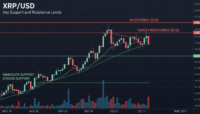
- Bitcoin was unable to sustain momentum above key resistance levels, triggering cascades of stop-loss orders and margin calls that intensified the downturn (cryptoticker.io).
- With heavy leverage still present across crypto derivatives markets, even modest slides can snowball into large-scale liquidations—evidenced by hundreds of millions in forced exits (ainvest.com).
Regulatory Uncertainty and Capital Rotation
- In the U.S., regulatory ambiguity remains high. Senate deliberations on crypto oversight continue to linger, dissuading institutional participation (cryptoticker.io).
- Simultaneously, news of JPMorgan’s upcoming stablecoin deployment is inducing shifts in capital—not necessarily signaling growth, but rather sector rotations within crypto (cryptoticker.io).
Industry Perspectives: What Experts Are Saying
"Bitcoin’s failure to regain footing above $90,000 amid macro shockwaves underscores its continued classification as a high-risk asset—appropriate for long-term bets, not short-term defenses."
— Gadi Chait, Investment Manager at Xapo Bank (cryptonews.com)
"The downturn isn't random—it’s a macro-driven reset: leverage unwinding, regulatory uncertainty, and policies from hawkish central banks. Yet, amidst this reset lies a structural buying opportunity."
— AInvest News Editorial, reflecting broader analyst commentary (ainvest.com)
Summary Table: Forces Shaping the Sell-Off
| Factor | Impact Summary |
|--------------------------------|----------------------------------------------------------|
| Geopolitical Tensions | Elevated risk aversion; movement toward traditional safe havens (e.g., gold) |
| Technical Resistance | Price rejections amplified through leveraged liquidations |
| Regulatory Ambiguity | Delays and fears suppress institutional investment |
| ETF Outflows | Ongoing redemptions undermining momentum |
Conclusion: A Complex Pullback, Not a Collapse
The current crypto market decline stems from a layered mix of geopolitical backlash, macroeconomic uncertainty, leveraged crunches, and regulatory ambiguity. While the numbers are pressing—market cap down nearly 1%, massive liquidations, and ETF outflows—it’s not a wholesale collapse. Instead, it's a structural correction in a maturing market.
Investors who understand that digital assets still offer compelling long-term value—as blockchain infrastructure deepens and regulatory clarity eventually improves—may view this as a reset moment. But for now, this downturn belongs to the “short-term defensive” playbook, not the “buy-any-dip” strategy.
Key Takeaways for Stakeholders
- Monitor geopolitical developments closely—they continue to be the biggest trigger for volatility.
- Keep a keen eye on resistance levels and leverage exposure—technical moves can create domino effects in crypto.
- Regulatory clarity remains a critical wildcard; shrugged-off uncertainty may weigh on participation.
- ETF flow trends still matter—a sustained shift away from crypto in institutional funds can deepen the correction before any recovery.
This nuanced sell-off may not be a sign of terminal decline—but it is a reminder that crypto still dances to the rhythm of global finance.









Leave a comment