


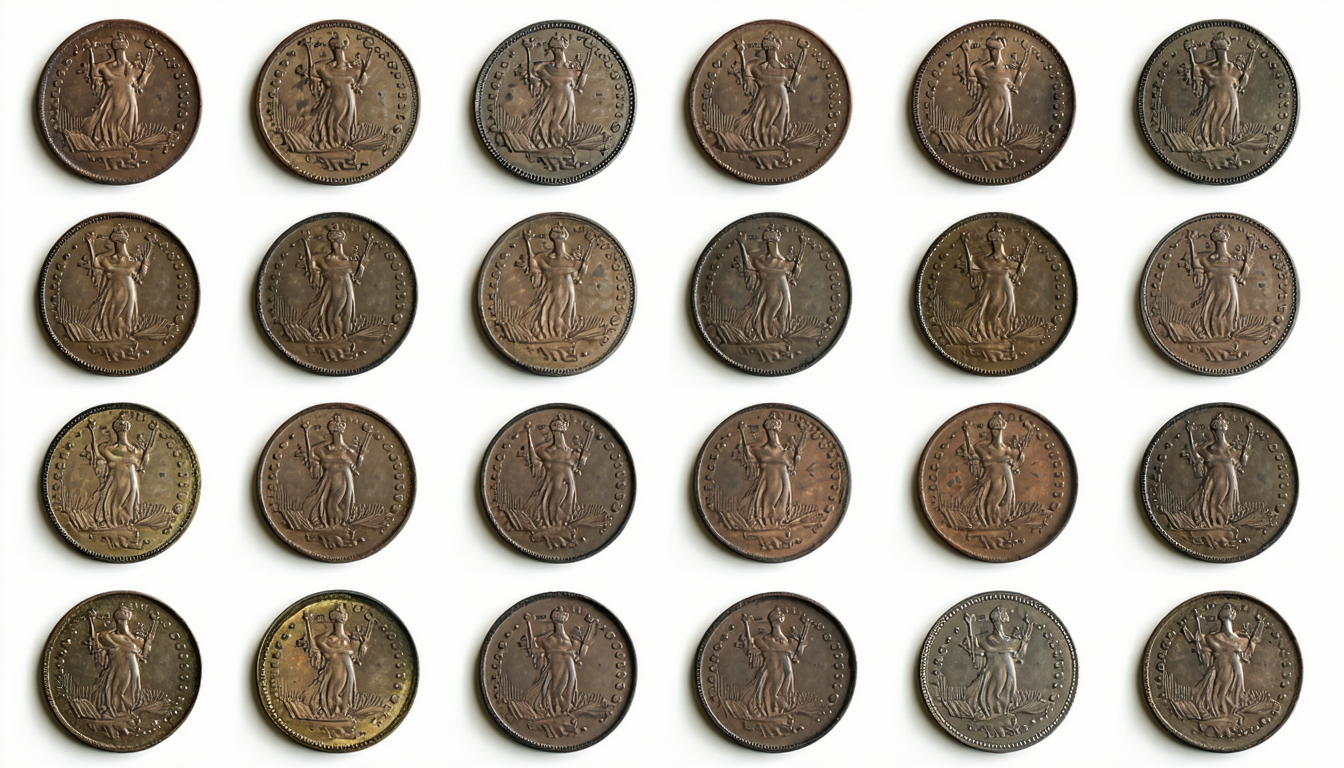
Old Coin Price Value Guide and Collector’s Market Trends
Introduction: Why “Old Coin Price” Matters—And Why It Feels a Bit Chaotic
Collectors, investors, and history buffs converge where old coin prices are concerned. It's not just about metal content—it's about story, rarity, condition, and sometimes sheer mystery. Today, platforms like PCGS report jaw‑dropping swings in values—some coins suddenly double or triple on a single day. It's a living market, full of nuance. So let’s take a human, conversational, slightly imperfect dive into how to understand old coin price trends and what to watch for.
Market Snapshot: Eye‑Popping Gains and What They Mean
PCGS’s Rare Coin Market Report for January 26, 2026 highlights several extreme price moves. For instance:
- A 1943‑S 50‑cent piece, PL, graded MS‑65, surged to around $7,500—actually up from about $1,500, a 400 % spike in just a day.
- A 2000‑W SAC dollar (gold, space‑flown) in DCAM finish, grade PR‑69, traded near $600,000, up 20 % from $500,000. Those numbers, though massive, remind us that collectible coins live in a world of rarity, narrative, and auction fever.
(pcgs.com)
Beyond these extremes, more modest increases—like a 1938‑D 50C gaining 43 % to $50, or a 1915 1C PR RB climbing to about $1,000—suggest broad collector demand at play. It’s a mix of hobbyist fervor, scarcity, and storytelling.
(pcgs.com)
Understanding the Drivers: Rarity, Market Sentiment, Unlocks
Rarity & Provenance: The Eternal Anchors
Vintage coins with low mintages, special finishes (“PL,” “DCAM”), or spaceflight provenance naturally attract premium pricing. A gold dollar flown in space? That’s irresistible to certain collectors—and the market bears it out.
Market Sentiment and Shifting Tides
Numbers don’t exist in a vacuum. Sometimes a celebrity mention at a coin show, an emerging grading revelation, or even broader economic sentiment can drive dramatic swings. Smaller or graded‑scarce denominations can be especially sensitive to hype—or to panic.
Unlocks and Availability
Remember, coin markets are about supply. Many rare coins are privately held. When one appears for sale, it may draw intense bidding and push prices sharply higher. Conversely, if a hoard emerges or more specimens become available, prices might compress sharply.
Collector Behavior: A Blend of Rational Analysis and Emotional Impulse
Buying old coins isn’t always rational. Sure, grade and certification matter. But collecting is equally emotional. The desire to complete a set, own something unique, or be part of a narrative often trumps spreadsheets.
Consider two imagined collectors:
- Alice, who hunts high‑grade early cents, uses price trend charts, follows auction archives, and bids methodically. She looks at population reports, macro trends, and anticipated interest rate policy.
- Bob, who sees a beautifully toned Morgan dollar at a local show and just feels he needs it. Market value? That's secondary. The coin speaks to him.
That divergence reflects the market's dual personality: analytical and sentimental. Both drive value.
How to Track “Old Coin Price” with Authority—and Avoid Pitfalls
1. Use Reputable Market Reports (like PCGS, NGC, Heritage Auction archives)
These provide daily or weekly snapshots of realized prices—often in chart form, sometimes including unsold lots. They’re not perfect, but better than hearsay.
2. Compare Graded Population Reports
Understand how many coins exist at each grade. A jump in population can put downward pressure on price, whereas limited survivors often retain or gain value—even if the metal price drops.
3. Watch Auction Realizations, Not Just Estimates
Auction houses often list estimated ranges. Real value is what the lot sells for—not the aspirational pre‑sale price. Always check final sale results.
4. Stay Wary of Online Listing Overpricing
Some dealers list rare coins at eye‑popping premiums. That’s fine—just don't assume listed price equals market price. Auctions tell the truth.
“Even coins with near‑identical characteristics can sell at wildly different prices depending on narrative and buyer psychology,” notes a veteran numismatist. Which is to say—story and verifiable rarity often matter as much as grade.
Real‑World Example: 1943‑S 50C (PL) Price Explosion
On January 26, 2026, a 1943‑S 50‑cent piece, deep prooflike (PL), graded MS‑65, jumped from ~$1,500 to ~$7,500—a 400 % increase. That likely reflects a sudden discovery of buyer demand or auction feature spotlight. One coin, one moment.
(pcgs.com)
This illustrates why tracking old coin price isn’t just watching charts—it’s watching stories unfold. That one holder listing to online bidders, trending social post, or rare circular display can change everything.
Practical Tips: Nail‑It or Go Home
- Track key indicators: grade, population trends, auction results.
- Diversify focus: don’t chase only “hot” coins; consider mid‑tier rarities with strong demand and better affordability.
- Mix sentiment with data: use both your head and your gut.
- Record prices—daily, weekly, monthly—and note when one‑offs appear.
- When in doubt, talk to experienced dealers or collectors—real human input still beats any algorithm in this market.
Summary and Next Steps
Old coin price trends are a living, breathing ecosystem of rarity, sentiment, provenance, and human unpredictability. Price jumps—like the 400 % leap in a 1943‑S 50C—are dramatic reminders that storytelling and scarcity drive values as much as metal and grade. Balance methodical analysis with narrative intuition to navigate this fascinating market.
Next steps: follow reputable reports, log price shifts, engage with the collector community (forums, shows), and always let both logic and passion guide your choices. Good luck, and keep your eyes—and heart—open.









Leave a comment