


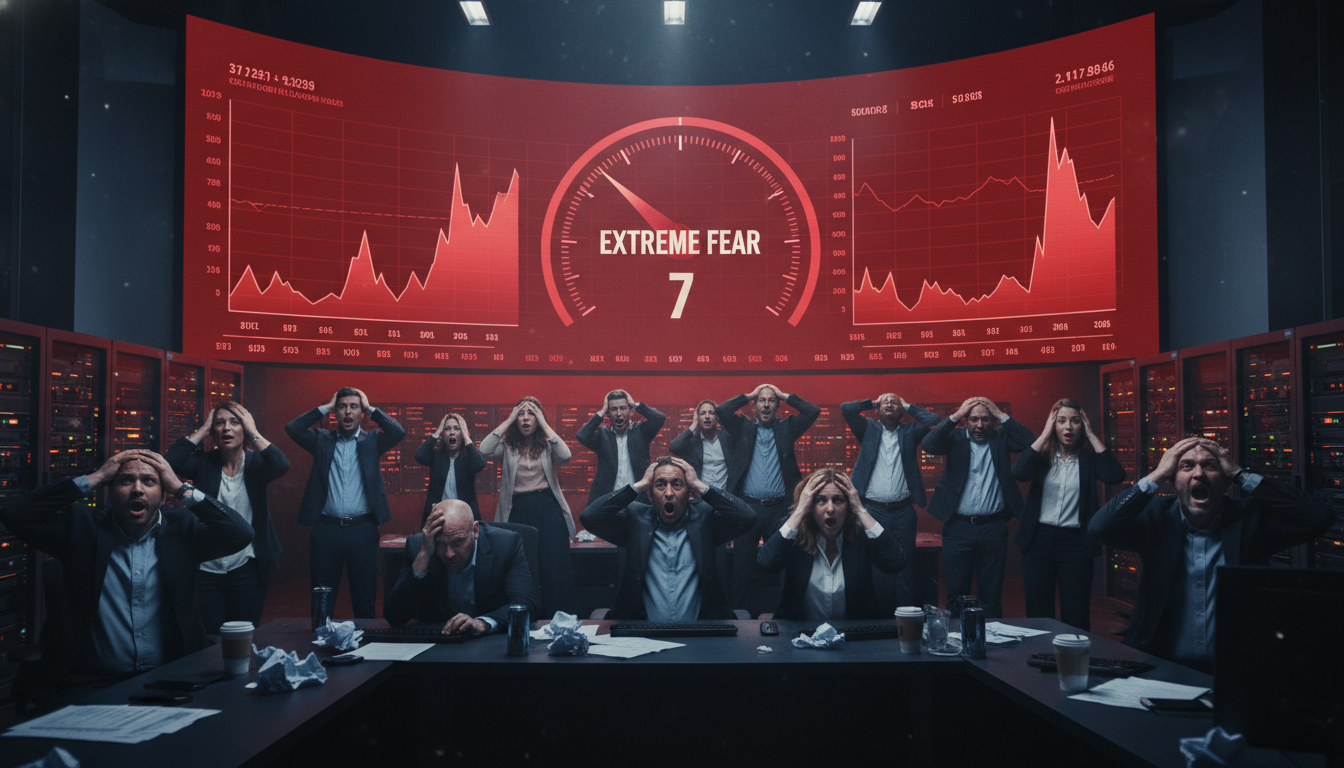
The Crypto Fear and Greed Index offers a snapshot of market emotions—fear or greed—by distilling six emotionally driven data sources into a 0–100 scale. Given the current cryptocurrency sell-off and sweeping investor anxiety, understanding whether now is a moment to buy feels both urgent and perplexing. This piece navigates the mechanics of the index, deciphers where we stand today, and assesses whether the current extreme fear could signal an opportunity or a deeper warning.
How the Crypto Fear & Greed Index Works: Gauging Emotional Swings
The index aggregates six primary sentiment drivers:
- Volatility (25%): Compares Bitcoin’s current price fluctuations to 30- and 90-day averages—higher volatility = more fear .
- Momentum & Volume (25%): Examines recent trading activity. Heavy buy-in often suggests greed, while thin or erratic activity signals fear .
- Social Media (15%): Measures chatter on platforms like Twitter and Reddit. Rising hype may indicate greed; silence may indicate fear .
- Bitcoin Dominance (10%): A rising BTC dominance implies a flight to safety (fear), while a drop suggests altcoin speculation (greed) .
- Google Trends (10%): Searches like "Bitcoin crash" register fear, while "how to buy Bitcoin" suggest greed .
- Surveys (15%): Public sentiment polls—though note, these are currently paused in many implementations .
Essentially, the Index compresses human psychology into a single number. Lower scores (0–24) imply extreme fear, while higher ones (75–100) signal extreme greed. It’s used as a contrarian trigger: panic may suggest buying opportunities; euphoria may hint at overvaluation .
Market Mood Today: Extreme Fear Amid Crypto Collapse
Recent prices show Bitcoin collapsing to the low $60,000s—a 50% drop from its October 2025 peak near $126,000—amid a broader $2 trillion meltdown in crypto markets . Market sentiment currently reads as “full capitulation,” with analysts warning of further downside toward $55,700 or even $38,000 if the slide continues .
Indicative of emotional extremes, the latest Crypto Fear & Greed Index has plunged to 9 out of 100, signaling unparalleled panic normally seen at market crashes . Just a day earlier, on February 5, the index already showed extreme fear at 12/100 .
Interpreting the Current Sentiment: Should You Buy?
The Contrarian View: Fear as a Signal
When sentiment hits extreme lows, contrarian investors often see it as a chance to enter the market. The theory is: when everyone’s running out, the downside may already be priced in. That’s part of why the index exists—to combat FOMO and irrational selling .
The Cautionary Perspective: It Might Get Worse
But extreme fear doesn't guarantee a quick rebound. Analysts warn of more downside due to macroeconomic pullback, policy uncertainty, and ongoing institutional sell-offs . Fear often persists longer than expected, and “capitulation mode” could stretch into deeper territory before an eventual reversal .
“When everyone’s panicking, that may be where the best setups are forging—but only if you're grounded in fundamentals.”
— Imagine this as a sentiment-savvy trader’s perspective.
Real-World Examples: Fear-Driven Entry Points
In past bear markets, sentiment tools proved their mettle. For instance, Bitcoin’s Fear & Greed Index hit extreme fear during the 2020 crash, before the 2021 bull run began—timing buys around there yielded strong returns . Similarly, other sentiment measures like the Bitcoin Misery Index have historically flagged pessimism before major recoveries . Notably though, these indicators remain just one layer of insight among many.
Strategic Insights: Weighing Sentiment Against Fundamentals
Pros of Viewing Extreme Fear as Opportunity
- Lower price anchor: Current levels may already discount much of the negative sentiment.
- Contrarian edge: Emotional lows can precede trapped upside, if other fundamentals hold.
Cons & Risks of a Premature Entry
- Potential continuation of decline: Markets don’t reverse simply because sentiment is low.
- Exogenous shocks: Reg delays, macro shifts, or further big institutional moves could deepen drawdowns.
Conclusion
The Crypto Fear & Greed Index now sits at historically low levels—an unmistakable sign of market panic. While contrarian investors may perceive this as a “buying” moment, caution remains warranted. Emotional indicators like this are powerful lenses, but not crystal balls. Pair sentiment with fundamentals, assess your risk tolerance, and avoid emotional traps. If history is a guide, the panic here may signal a turning point—but not necessarily a sharp rebound just yet.
FAQs
What does a Fear & Greed score of 9 mean?
A score of 9 indicates extreme fear and panic in the market—often seen during major crashes and capitulation phases. It reflects peak pessimism among investors and traders.
Can the Fear & Greed Index predict market bottoms?
Not reliably. It’s a contrarian indicator—extreme fear may signal oversold conditions—but reversals depend on fundamentals, macro trends, and recovery dynamics.
Why is Bitcoin’s dominance included in the index?
Bitcoin dominance indicates a shift toward perceived safety. Rising dominance often suggests investors are fleeing risky altcoins, reflecting fear rather than greed.
Why should investors not rely solely on this index?
Because sentiment is backward-looking and reactive. It doesn’t account for regulatory changes, macro trends, or institutional movements—all of which can reshape markets regardless of emotion.
How often is the Crypto Fear & Greed Index updated?
The index is updated daily using real-time data across its six components, though some elements like surveys may be paused or updated less frequently.
Is a low index score a guaranteed buying opportunity?
No—it signifies emotional extremes, but timing trades based purely on sentiment without context may lead to premature decisions. Use it as one signal among many.










Leave a comment