


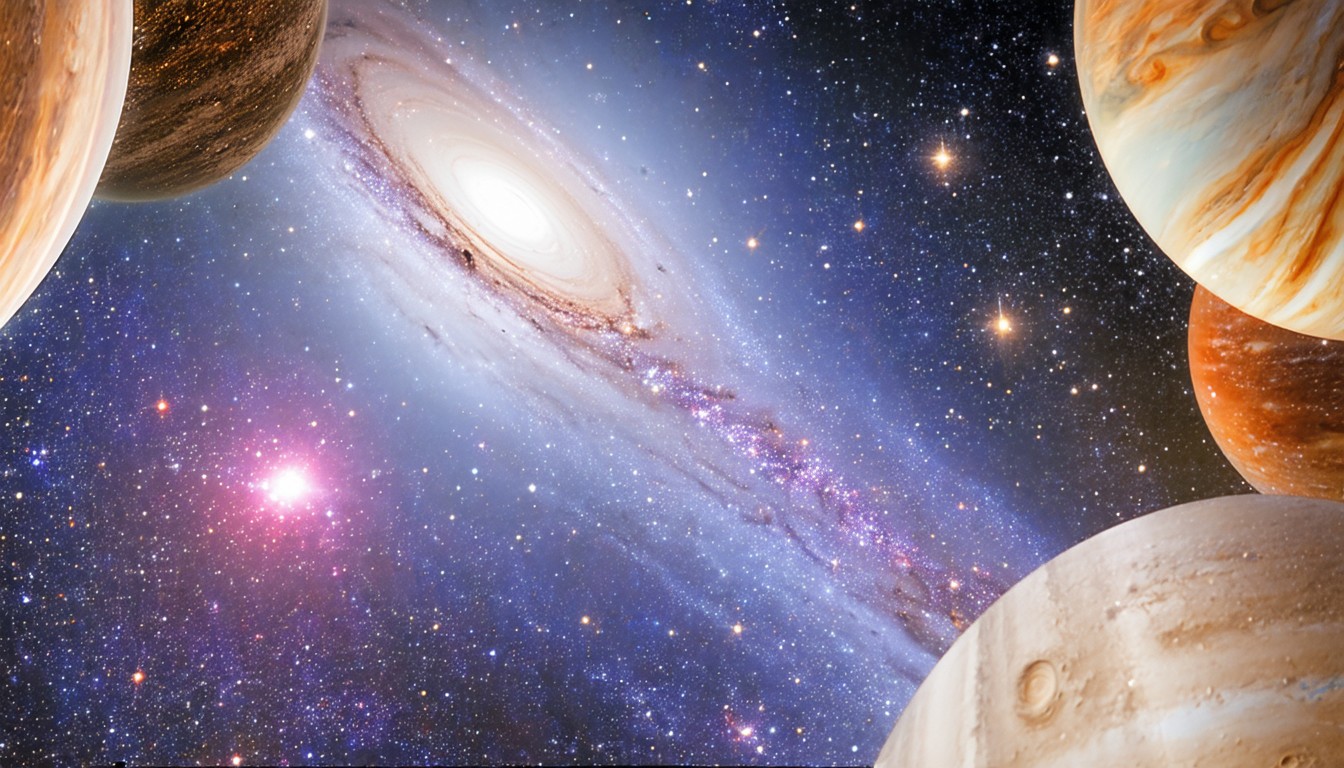
The word "galaxy" conjures up breathtaking images: spiraling arms radiating with starlight, colossal swells of cosmic dust, and mysteries stretching far beyond the limits of our solar system. Galaxies are more than just distant clusters of stars; they are the universe’s architects, shaping the very fabric of space, time, and life as we know it. In recent decades, advances in telescopic and computational technology have ushered in a golden era of discovery, enabling astronomers to map billions of galaxies and probe the secrets that lie within. The ongoing study of galaxies not only reshapes our understanding of the cosmos, but also prompts big questions about the existence and future of the universe itself.
What Is a Galaxy? Structure, Scale, and Diversity
Galaxies are gravitationally bound systems composed of stars, gas, dust, dark matter, and often a supermassive black hole at their center. These immense entities come in various forms:
- Spiral galaxies (e.g., the Milky Way and Andromeda): Recognized for their pinwheel shapes and luminous arms.
- Elliptical galaxies: Featureless, round, or elongated conglomerates, often home to older, redder stars.
- Irregular galaxies: Lacking clear structure, these are often shaped by gravitational encounters or collisions.
A galaxy can range from a few million to several trillion stars. The Milky Way, for example, is home to an estimated 100–400 billion stars, spanning roughly 100,000 light-years. In contrast, ultra-compact dwarf galaxies may contain fewer than a billion stars but are rich in scientific intrigue.
The Role of Dark Matter and Black Holes
Despite their dazzling appearance, visible matter comprises only a small fraction of a galaxy’s true mass. The rest is believed to be invisible "dark matter," an elusive substance that exerts gravitational force yet cannot be detected directly by telescopes. Most galaxies are also anchored by a supermassive black hole, whose mass profoundly influences galactic evolution.
"Galaxies are the universe’s natural laboratories, offering insight into everything from dark matter to star formation," says Dr. Lila Thompson, an astrophysicist at the Space Telescope Science Institute. "Every new observation pushes us closer to understanding the cosmic blueprint."
The Formation and Lifecycle of Galaxies
Galaxies form and evolve over billions of years through a complex interplay of cosmic forces. Their histories are governed by both violent and gradual processes—collisions, mergers, star formation, and feedback from black holes and supernovae.
The Birth of Galaxies
Modern theories suggest that the first galaxies began taking shape a few hundred million years after the Big Bang. Tiny fluctuations in density within the primordial universe grew under gravity, drawing in gas and dark matter. Over time, these regions coalesced to form the earliest protogalaxies, where the universe’s first stars ignited.
Mergers, Interactions, and Transformation
Encounters between galaxies are common throughout cosmic history. Because of gravity, galaxies can collide, fuse, or pass close enough to dramatically reshape each other. The stunning Hubble Space Telescope images of the "Antennae Galaxies," locked in a titanic merger, have become iconic examples of these cosmic dances.
- Mergers: When two galaxies collide, star formation can surge, and their shapes may become distorted.
- Tidal interactions: Close encounters pull out long tails of stars and gas, redistributing material and triggering new stars to form.
In some cases, entire new galaxy types are forged from such interplays. The Milky Way itself is on a collision course with its neighbor Andromeda, expected to merge in about 4–5 billion years.
The Milky Way: Our Galactic Home
Our own galaxy, the Milky Way, is a classic barred spiral galaxy. Home to our Sun and solar system, as well as up to 400 billion stars, it's just one member of the Local Group—a family of more than 50 galaxies including Andromeda, the Large and Small Magellanic Clouds, and numerous dwarfs.
Mapping the Milky Way
Accurate measurement of such colossal structures is no small feat. Missions like the European Space Agency’s Gaia have mapped positions and motions of over a billion Milky Way stars. This unprecedented data is transforming our knowledge of galactic structure, dynamics, and history.
- Galactic center: The core of the Milky Way harbors Sagittarius A*, a supermassive black hole millions of times more massive than our Sun.
- Spiral arms: These regions, rich in gas and dust, serve as stellar nurseries where new stars are born.
Surrounding the disk, a spherical halo contains ancient stars and the hidden mass of dark matter.
Observational Technologies and Major Discoveries
Breakthroughs in telescope optics, spectroscopy, and digital imaging have revolutionized our view of galaxies in the 21st century.
The Role of Space Telescopes
Observatories like the Hubble Space Telescope have captured galaxies at various stages, from nearby spirals to light traveling over 13 billion years, effectively photographing the “childhood” of the universe. The James Webb Space Telescope, launched in 2021, reaches even further, peering through cosmic dust and revealing the birth of stars and galaxies far in the past.
- Multi-wavelength astronomy: Observing galaxies in radio, infrared, x-ray, and gamma-ray wavelengths reveals processes invisible to optical telescopes, such as black hole emissions or cold molecular clouds.
New Frontiers
Surveys like the Sloan Digital Sky Survey and Vera C. Rubin Observatory’s Legacy Survey of Space and Time are cataloging unprecedented numbers of galaxies and deepening questions about dark matter, dark energy, and the cosmic web—a vast network that connects clusters of galaxies across the observable universe.
Galaxies and the Broader Universe
The study of galaxies delivers much more than aesthetic wonder. It is central to cosmology and the understanding of the universe’s origin, structure, and fate.
Clusters, Superclusters, and the Cosmic Web
Galaxies are rarely isolated. They often reside in clusters and superclusters, vast gravitationally bound groups that stretch across millions of light-years. Large-scale surveys reveal that these structures arrange themselves in filaments and walls, separated by giant voids—a pattern known as the cosmic web.
Implications for the Fate of the Universe
Research on galaxies contributes directly to debates about dark energy, the universe’s expansion, and ultimate fate. Observing distant galaxies acts like a time machine, offering insight into how the universe has changed over billions of years and what the far future might hold.
Conclusion: Gazing Ahead—Challenges and Opportunities
Galaxies are keys to the universe’s greatest mysteries. As scientific instruments sharpen and collaborative projects gather bigger datasets, researchers continue to unravel the secrets of galactic formation, growth, and fate. Beyond their scientific value, galaxies inspire wonder and remind us of our place in something vast and ancient.
Exploring galaxies is not just an exercise in cosmic curiosity but a pathway to understanding the laws governing all existence. The next wave of discovery—involving artificial intelligence, international coordination, and space-based observatories—promises to push the boundaries of what is possible, lighting the way for generations of explorers to come.
FAQs
What defines a galaxy?
A galaxy is a massive gravitationally bound system containing stars, gas, dust, dark matter, and typically a central black hole. Its structure and makeup distinguish it from smaller star clusters or solar systems.
How do astronomers study galaxies?
Astronomers use advanced telescopes, both ground- and space-based, that capture light across many wavelengths to analyze galaxies' composition, movement, and history. High-resolution surveys and computer simulations help reveal complex galactic processes.
How many galaxies are in the observable universe?
Current estimates suggest there are hundreds of billions of galaxies in the observable universe. Future observations and improved instruments may refine this number further.
What causes galaxies to collide?
Galaxies collide due to gravitational attraction. Over cosmic timescales, these interactions can merge galaxies and trigger intense new star formation or structural rearrangements.
Why is dark matter important in galaxies?
Dark matter makes up most of a galaxy’s mass, influencing its rotation and overall stability. Its gravitational effects help bind galaxies together, even though it cannot be seen directly.
What will happen when the Milky Way and Andromeda collide?
The Milky Way and Andromeda are expected to merge in several billion years. The process will likely transform both galaxies into a single, larger elliptical galaxy, though the vast distances between stars mean actual stellar collisions are rare.











Leave a comment