


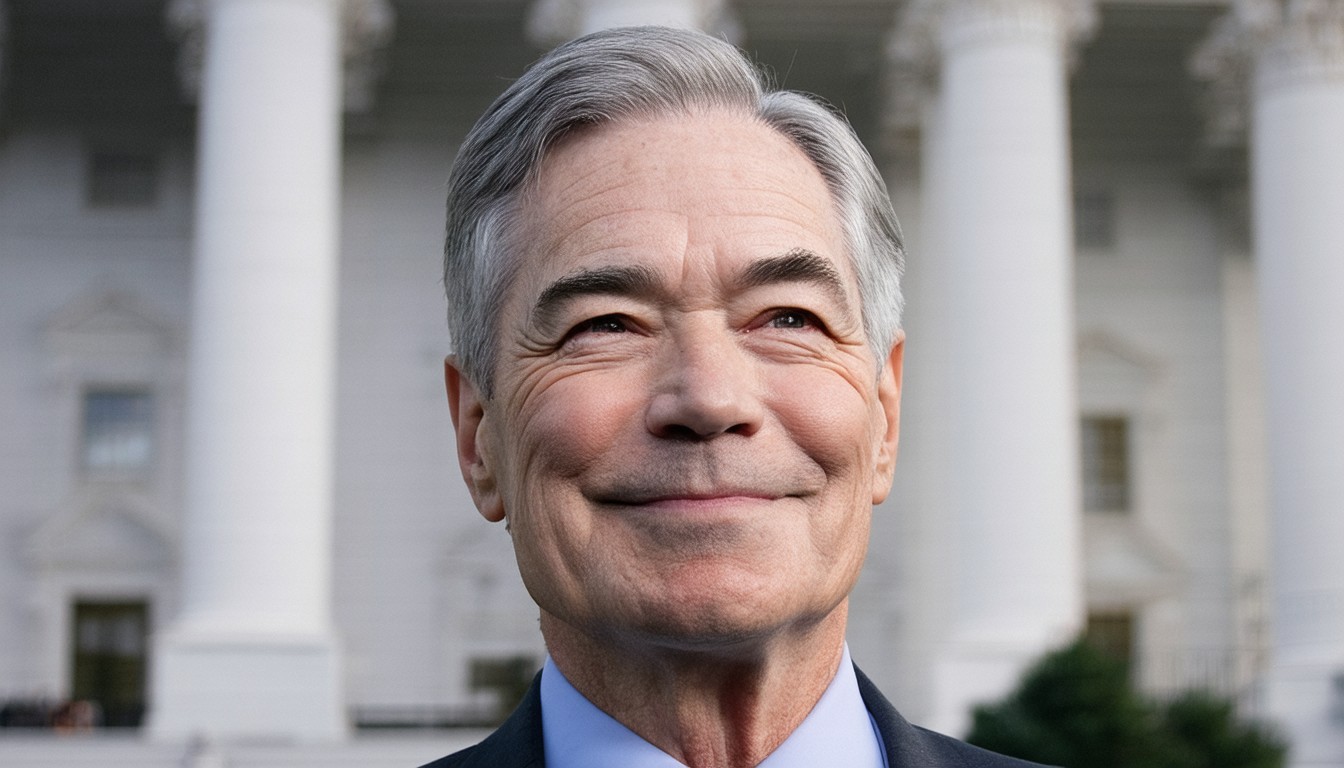
Jerome Powell, the current Chair of the Federal Reserve, stands as one of the most consequential policymakers in modern global finance. With a tenure marked by economic shocks, persistent inflation, and sweeping policy pivots, Powell’s leadership has shaped not only the trajectory of the American economy but also influenced markets worldwide. His pragmatic approach, clear communication style, and willingness to adapt have defined a new era of monetary strategy in the United States.
Early Life and Path to the Federal Reserve
Born in Washington, D.C. in 1953, Jerome Powell’s career is rooted in both public service and private sector expertise. He earned his undergraduate degree in politics from Princeton University and later obtained a law degree from Georgetown University. Before joining the Federal Reserve, Powell held positions at prestigious institutions such as Dillon, Read & Co., The Carlyle Group, and the Treasury Department under President George H.W. Bush.
This diverse background provided Powell with a broad understanding of financial markets and public policy. His competence in navigating regulatory issues and Wall Street dynamics would later become crucial as he faced historic challenges at the helm of the Federal Reserve.
Rise Through the Federal Reserve Ranks
Early Roles and Appointment
Powell joined the Federal Reserve Board of Governors in 2012, first appointed by President Barack Obama. Historically, many Chairs are economists by training; Powell, however, is one of the few with a background in law and investment banking. This unconventional path brought a new lens to monetary policy, focusing on both technical rigor and practical market insights.
Leading Through Crisis
Powell’s steady ascent coincided with mounting global uncertainties. Upon becoming Chair in 2018, appointed by President Donald Trump, Powell faced immediate scrutiny over policy directions. His tenure quickly became defined by challenges such as the COVID-19 pandemic, supply chain disruptions, and the most severe bout of inflation the U.S. had seen in decades.
"Jerome Powell’s focus on clear communication and adaptability has restored confidence in the Fed’s ability to manage crisis events," notes Diane Swonk, chief economist at KPMG.
Philosophy and Approach to Monetary Policy
Emphasis on Transparency and Communication
Powell’s tenure has been marked by an unmistakable commitment to transparency. He pioneered frequent press conferences and straightforward messaging—a notable shift from the more guarded language of some past Chairs. This openness has helped stabilize markets during periods of uncertainty, such as the swift policy adjustments seen during the early days of the coronavirus pandemic.
Data-Driven and Pragmatic Policy Responses
Rather than adhering dogmatically to economic theory, Powell is known for his pragmatic, flexible style. He has repeatedly emphasized that data, not ideology, should drive decisions. As inflation surged in 2021 and 2022, the Fed, under Powell’s leadership, shifted from accommodative monetary policy to sharply raising interest rates—demonstrating a willingness to act decisively as conditions changed.
Powell has also stressed the importance of learning from past mistakes. By referencing the lessons of high inflation eras, he has made clear that the Federal Reserve must be willing to act aggressively to protect price stability, even at the risk of short-term discomfort for markets or the broader economy.
Advocacy for Broad-Based Economic Recovery
A key theme of Powell’s speeches has been a focus on inclusive recovery. He often cites concerns about labor market participation, wage growth among lower-income workers, and the impact of inflation on vulnerable populations. This perspective has influenced policies such as ongoing asset purchases and support for low interest rates during the initial phase of pandemic recovery—measures designed to support not just Wall Street, but Main Street as well.
Major Decisions and Their Impact
Navigating the COVID-19 Pandemic
When the pandemic triggered a global economic shock in early 2020, Powell led the Federal Reserve in rapidly slashing interest rates to near zero and launching massive asset purchase programs. The Fed’s balance sheet expanded significantly as a result, supporting liquidity in the financial system and helping to stave off a deeper recession.
Real-world impacts were swift: credit markets stabilized, mortgage rates dropped, and businesses—particularly small and medium-sized—found access to emergency capital. The Fed’s decisive moves have been credited with helping the U.S. economy bounce back more quickly than many others.
Addressing Inflation and Rate Hikes
In 2021 and 2022, persistent supply chain disruptions and robust fiscal spending led to inflation well above the Fed’s 2% target. Powell acknowledged early miscalculations—at first labeling inflationary pressures as “transitory”—but ultimately pivoted the Fed’s stance. By 2022, the central bank had embarked on the fastest series of interest rate increases in decades.
This aggressive tightening, while controversial, has sought to tame inflation even at the expense of slower economic growth. Critics and supporters alike recognize the complexity of these decisions; Powell’s balancing act between curbing inflation and maintaining labor market health has no modern precedent.
Reinforcing Financial Stability
A recurrent theme under Powell’s leadership has been the vigilance around financial stability. He has advocated for stronger regulation—especially in areas such as bank capital requirements and stress testing—recognizing the risks posed by rising leverage and new forms of financial innovation. At the same time, he has underscored the need for regulatory frameworks to keep pace with technologies including cryptocurrencies and fintech platforms.
Reputation and Influence on Global Policy
Powell’s actions reverberate far beyond U.S. borders. Given the reserve currency status of the U.S. dollar, changes in Fed policy often spark responses from central banks in Europe, Asia, and beyond. By providing clear policy signals, Powell has helped reduce volatility in global financial markets and strengthen the perception of the Federal Reserve’s independence.
Market observers frequently contrast Powell’s collaborative approach with predecessors such as Alan Greenspan or Ben Bernanke. Despite criticism from various corners—ranging from politicians seeking looser policy to market hawks arguing he should have acted sooner on inflation—Powell is often praised for his steady hand during extraordinary times.
Conclusion: Powell’s Enduring Legacy on Monetary Policy
Jerome Powell’s tenure as Federal Reserve Chair is underscored by resilience, adaptability, and transparency. Facing consecutive crises, he has navigated the fine line between supporting economic growth and maintaining price stability. By championing clear communication and data-driven decisions, Powell has restored a sense of purpose and predictability to U.S. monetary policy.
Going forward, the challenges of managing inflation, evolving financial technologies, and ensuring equitable economic recovery remain formidable. Still, Powell’s approach demonstrates that sound leadership can steer monetary policy through even the most turbulent times.
FAQs
What is Jerome Powell best known for as Federal Reserve Chair?
Jerome Powell is renowned for steering the Federal Reserve through the COVID-19 pandemic and subsequent period of high inflation, implementing both emergency and strict monetary policies in response to rapidly changing economic conditions.
How has Powell’s leadership approach differed from previous Fed Chairs?
Unlike many predecessors, Powell is noted for his non-academic background, transparent communication style, and willingness to pivot policy rapidly based on economic data.
Why are Jerome Powell’s decisions closely watched by global markets?
Powell’s policy choices influence not only the U.S. economy but also global markets, as the U.S. dollar serves as the world’s primary reserve currency and Fed signals often set the tone for international central banks.
How did Powell respond to the COVID-19 crisis?
He led the Fed in lowering interest rates to near zero and expanding asset purchases on an unprecedented scale, aiming to stabilize markets and ensure credit availability across the economy.
Has Powell faced criticism during his tenure?
Yes, Powell has faced critique for initially underestimating the persistence of inflation and for the Fed’s rapid rate hikes, yet his overall leadership has been credited with navigating a complex economic landscape.
What is Powell’s stance on financial regulation?
Powell supports robust regulation, emphasizing the need for stress testing, appropriate bank capital requirements, and rules to address new financial technologies to maintain system stability.











Leave a comment