


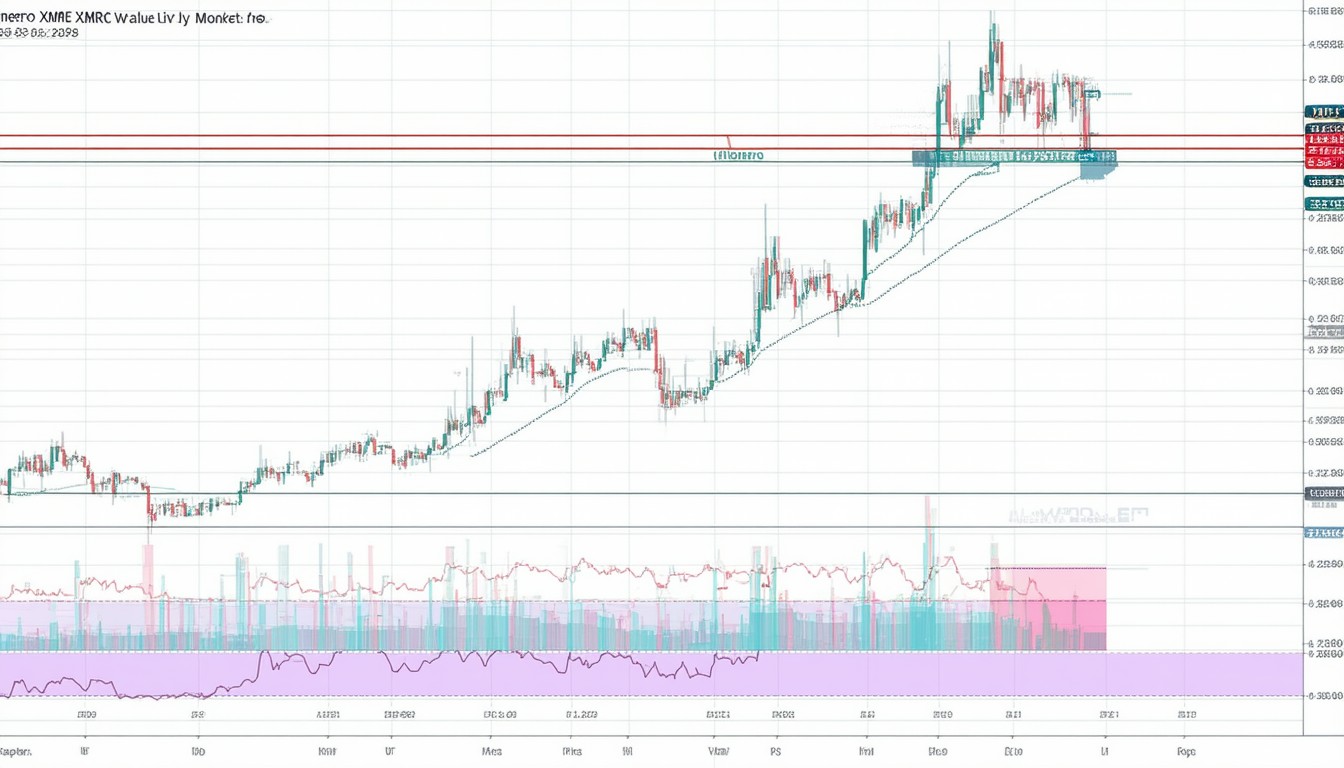
Monero (XMR) stands apart from most cryptocurrencies as a privacy-centric digital asset. Unlike transparent blockchains such as Bitcoin or Ethereum, Monero’s protocol is engineered for confidential, untraceable transactions — a feature that directly impacts how its price behaves and is perceived in volatile markets. As demand for financial privacy rises, so too does scrutiny on Monero’s place in regulatory landscapes and its future as a mainstream asset.
Live Monero Price Movements and Market Context
Monero’s price, much like that of major cryptocurrencies, is shaped by a mix of factors: broad market sentiment, innovations in privacy technology, liquidity, and geopolitical developments. Real-time XMR price charts frequently reveal sharp upticks or dips, often correlated to news about exchange delistings, regulatory headlines, or advancements in Monero’s features.
While daily trading volumes can fluctuate, XMR has consistently remained one of the most traded privacy coins since its launch in 2014. Its presence on both centralized and decentralized exchanges allows for a degree of liquidity, although Monero’s privacy features sometimes lead to cautious listing practices — with exchanges occasionally delisting the token due to regulatory uncertainties.
The market capitalization of Monero varies, hovering among the top 30 cryptocurrencies by total value in circulation. Its supply is algorithmically capped, intensifying price responses to changes in demand.
Key Factors Driving XMR Price Volatility
Several core elements influence the live Monero price:
- Privacy Demand: Heightened global attention to digital privacy often draws investors to Monero, driving demand.
- Exchange Listings: Major exchange support can spur liquidity; conversely, delistings may trigger sharp price drops.
- Regulatory News: Law enforcement focus on privacy coins sways public perception, and, therefore, demand.
- Technological Upgrades: Improvements to Monero’s protocol — such as enhanced ring signatures or bulletproofs — can build confidence and attract attention.
Technical Analysis: Patterns in XMR Price Action
Technical analysis aims to find patterns in price charts, trading volumes, and market behavior to forecast future trends. For Monero, both technical and fundamental factors must be weighed, given its unique status.
Historic Price Movements and Chart Patterns
Historically, Monero’s price has mirrored broader crypto market cycles but with its own distinguishing twists:
- Bull markets: Monero often outperforms during times of increased focus on privacy, evidenced during the 2017-2018 boom and again in periods of increased surveillance debates.
- Bear markets: XMR can demonstrate resilience, as some investors view privacy coins as a hedge against surveillance and market transparency.
Popular chart patterns for Monero include consolidation phases followed by breakout rallies, and sharp corrections reflecting regulatory news or technical updates. On-chain indicators, like network hash rate and transaction volumes, are utilized to gauge sentiment beyond price charts.
Key Technical Indicators Monitored by Traders
- Moving Averages: Both short-term (e.g., 20-day) and long-term (e.g., 200-day) moving averages to identify trend direction and possible support/resistance.
- Relative Strength Index (RSI): Helps evaluate whether XMR is overbought or oversold, signaling potential reversal points.
- Volume Oscillators: Map the intensity of buy/sell pressure during price swings.
- Fibonacci Retracement Levels: Used to identify likely regions of price consolidation or reversal based on historical price moves.
"While Monero price reacts to overall crypto market cycles, its focus on privacy introduces a unique set of technical and regulatory catalysts few other digital assets face."
— Anna Baydakova, cryptocurrency journalist
Market Analysis: Influences Beyond the Chart
Beyond daily price action, Monero’s valuation is shaped by technological and social factors. These include community-led development, mainstream adoption hurdles, and ongoing dialogue with regulators.
Impact of Regulation and Institutional Attitudes
Unlike Bitcoin or Ethereum, Monero’s core appeal — privacy — is a double-edged sword. Some exchanges have delisted XMR in response to government pressure to comply with anti-money laundering regulations. Meanwhile, proponents argue that privacy is a basic right in financial systems.
Countries with a strong focus on digital sovereignty or citizen privacy occasionally see increased on-chain Monero activity. Simultaneously, the lack of institutional investment relative to more transparent assets restricts Monero's price from following the same upward patterns during large-scale crypto inflows.
Adoption, Liquidity, and Use Cases
Monero boasts an active developer community that prioritizes privacy-enhancing upgrades and network security. While mainstream merchant adoption lags behind Bitcoin and stablecoins, XMR is widely used in niche circles that value anonymous transactions or operate in high-risk environments.
Its liquidity across exchanges, while robust, is not immune from temporary shocks due to sudden delistings or external interventions. This occasionally amplifies price volatility compared to larger, more institutionally-backed cryptocurrencies.
Real-World Examples: Monero in Practice
Consider the 2021 surge in XMR trading amid reports of tightening crypto regulations in the U.S. and Europe. As privacy became a public debate, Monero saw renewed interest despite several major exchanges limiting availability. Similarly, technological upgrades such as the “Bulletproofs” protocol in 2018 reduced transaction costs and improved network efficiency — factors often reflected in positive price action following such releases.
On the other hand, exchange delisting waves in the Asia-Pacific in 2020 briefly sent the XMR price tumbling, underscoring Monero’s ongoing dance with regulators.
Concluding Insights: Navigating the Monero Price Landscape
Monero remains one of the most resilient privacy coins, arguably a bellwether for the category. Its price is a composite signal, reflecting both broad cryptocurrency sentiment and unique privacy-centric developments. Investors and observers should closely track regulatory trends, technical milestones, and shifts in exchange liquidity—factors that combine to shape live XMR value.
Ultimately, Monero’s future market performance will hinge on how the global community balances financial privacy against demands for transparency. As privacy issues move to the forefront of digital finance discussions, XMR’s position in the crypto ecosystem is likely to remain both prominent and debated.
FAQs
What makes Monero’s price different from other cryptocurrencies?
Monero’s price is heavily influenced by its strong privacy features, which attract users seeking anonymity but also bring extra regulatory scrutiny and occasional exchange delistings.
How can I view live Monero price data and charts?
Most reputable crypto exchanges and financial platforms offer real-time Monero price charts and market data. Tools like CoinGecko, CoinMarketCap, and TradingView also provide historical price analysis.
Why do some exchanges delist Monero?
Exchanges may delist Monero in response to regulatory pressures or to align with anti-money laundering policies, since its privacy features can complicate compliance with government regulations.
How often do Monero upgrades impact its price?
Major upgrades, especially those improving efficiency or privacy, tend to positively influence Monero’s price by increasing network utility and investor confidence, though each situation varies.
Is Monero a good store of value compared to Bitcoin?
While Monero offers unique privacy benefits, its price tends to be more volatile and subject to regulatory factors, making it less predictable as a long-term store of value than Bitcoin for some investors.
Where can Monero be used for transactions?
Monero is accepted by a growing number of online merchants and peer-to-peer marketplaces, especially where privacy is valued, but it’s not as widely integrated as more mainstream cryptocurrencies.










Leave a comment