


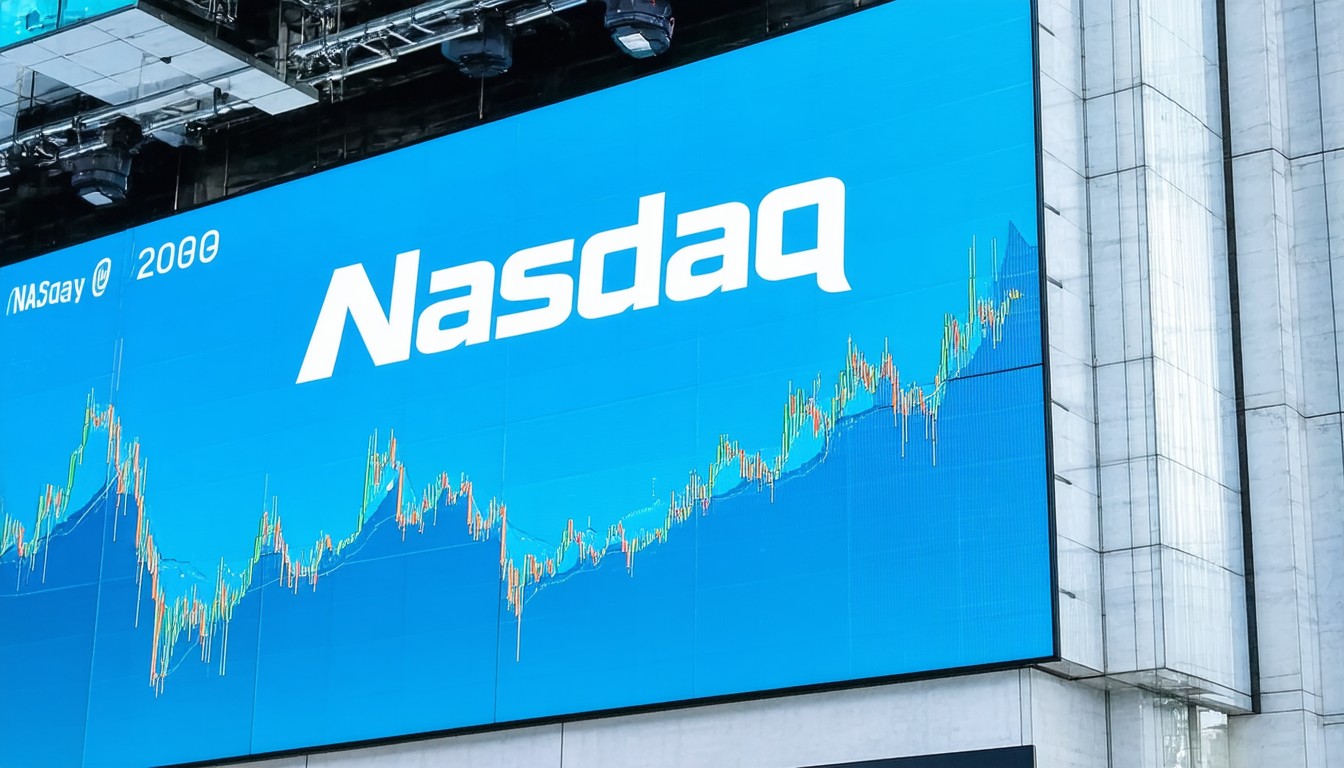
The Nasdaq Stock Market, universally recognized as simply "Nasdaq," has been at the forefront of global financial innovation since its inception in 1971. Originally making waves as the world’s first electronic stock exchange, Nasdaq has since evolved into a powerhouse platform, serving as home to many of the globe’s most influential technology giants and growth-oriented companies. With its reputation for embracing digital transformation and democratizing access to the equity markets, Nasdaq now acts as a crucial barometer for economic trends, investor sentiment, and industry disruption.
Beyond its iconic role in tech investing, Nasdaq's reach spans multiple sectors, from biotech to consumer services, and its signature indexes—especially the Nasdaq Composite and Nasdaq-100—are closely watched by traders, analysts, and policymakers alike. Understanding Nasdaq is essential for grasping the pulse of contemporary finance and the mechanics of stock trading in the digital era.
Historical Context and Core Structure of Nasdaq
The Evolution of Nasdaq: From Electronic Pioneer to Global Exchange
Launched by the National Association of Securities Dealers, Nasdaq set itself apart at a time when most stock markets operated on physical trading floors. It introduced a fully electronic quotation system, allowing brokers and dealers to quote and transact seamlessly, paving the way for real-time trading and price transparency.
Over the decades, Nasdaq’s technological edge attracted an ever-increasing share of innovative firms—culminating in the listing of household names like Apple, Microsoft, Amazon, and Meta Platforms (formerly Facebook).
"The Nasdaq doesn’t just reflect the trajectory of technology companies; it showcases the pace of change across the global economy itself."
— Market Strategist, Financial Times
Key Indices and Their Significance
The Nasdaq Composite is an index tracking more than 3,000 companies listed on the Nasdaq exchange, giving it a strong tech-centric character. Meanwhile, the Nasdaq-100 zeroes in on the 100 largest non-financial companies listed, providing a concentrated snapshot of leading industry players.
- Nasdaq Composite: Highly regarded as a tech barometer and often more volatile than older, diversified indexes like the S&P 500.
- Nasdaq-100: Features giants such as Nvidia, Alphabet (Google’s parent), and Tesla, influencing global investor sentiment.
Both indexes serve as benchmarks for mutual funds, ETFs, and a myriad of derivative financial products.
How Nasdaq Trading Works: Systems, Orders, and Participants
Market Structure and Trading Mechanisms
Nasdaq operates as a dealer’s market, where participants trade through a network of market makers rather than via a centralized auction. Market makers, typically large financial institutions, facilitate liquidity by simultaneously quoting buy and sell prices.
Trades are processed electronically through advanced systems such as the Nasdaq Market Center, ensuring efficiency and speed. High-frequency and institutional traders rely on Nasdaq’s technological backbone to execute complex strategies and arbitrage opportunities within fractions of a second.
Types of Orders and Access for Investors
Both institutional and retail investors have direct pathways to Nasdaq securities via online brokerages. Traders utilize various order types, including:
- Market Orders: Executed immediately at prevailing prices.
- Limit Orders: Filled only at a specified price or better.
- Stop Orders: Activated once a security reaches a preset price.
During periods of high volatility—often prompted by earnings releases, economic news, or geopolitical events—Nasdaq's robust trading infrastructure has proven critical to market stability, utilizing tools like circuit breakers to moderate extreme price swings.
Market Hours and Extended Trading
Nasdaq’s regular session runs from 9:30 a.m. to 4:00 p.m. Eastern Time, with pre-market (4:00–9:30 a.m.) and after-hours trading (4:00–8:00 p.m.) increasingly popular due to algorithmic and global trading needs. While these extended hours offer more flexibility, they’re also accompanied by lower liquidity and wider spreads, demanding careful risk management.
Key Insights: Nasdaq’s Influence and Trends
Technology Leadership and Market Sentiment
The dominance of technology stocks in the Nasdaq has seen the exchange at the epicenter of some of the largest market surges and pullbacks. For instance, in 2020–21, Nasdaq-100 companies experienced rapid gains as digital adoption soared during the pandemic. Conversely, tech-led volatility can quickly spill over into broader markets.
Similarly, Nasdaq’s marketplace acts as a launchpad for many high-profile initial public offerings (IPOs) and Special Purpose Acquisition Companies (SPACs). Airbnb, Snowflake, and Rivian are just a few recent examples of companies leveraging Nasdaq to go public and access capital at scale.
ESG, Diversity, and Global Expansion
Nasdaq has increasingly prioritized environmental, social, and governance (ESG) initiatives, mandating greater board diversity disclosures and sustainable business practices. These moves have resonated with institutional investors and global fund managers under pressure to align with emerging regulatory and stakeholder expectations.
Internationally, Nasdaq has expanded its footprint through technology partnerships and cross-listings, enabling it to facilitate equity trading in new markets—from Europe to Asia—via platforms like Nasdaq Nordic and Nasdaq Dubai.
Notable Milestones and Market Innovations
- First U.S. exchange to allow online trading—setting industry precedents for speed and transparency.
- Pioneering dark pools and alternative trading systems (ATS)—broadening liquidity options for institutional players.
- Continuous innovation via real-time data analytics and AI-based monitoring—offering a competitive edge over traditional exchanges.
Risks and Rewards: What Every Trader Should Know
Volatility and Market Sensitivity
Due to its concentration of high-growth companies, Nasdaq often swings more dramatically than its peers in both upward and downward directions. This heightened sensitivity means opportunities for outsized returns, but also sharper losses—especially during earnings season or economic downturns.
Access and Democratization Versus Complexity
Nasdaq’s commitment to technological innovation has opened its doors to a massive pool of global investors. At the same time, the speed and sophistication of electronic trading can amplify risks for less experienced participants—heightening the need for investor education and prudent risk management.
Regulatory Considerations
Nasdaq operates under the jurisdiction of the U.S. Securities and Exchange Commission (SEC) and must comply with a rigorous framework to ensure transparency, fair access, and market integrity. In recent years, regulatory focus has expanded to address algorithmic trading, cybersecurity safeguards, and disclosure best practices.
Conclusion: Nasdaq’s Continuing Impact on Global Finance
Nasdaq’s trajectory from humble electronic startup to global market juggernaut reflects the ongoing transformation of equity trading in the digital age. As technology continues to reshape both the companies that list and the investors who trade, Nasdaq stands out for its agility, inclusiveness, and global reach. For traders, fund managers, and everyday investors alike, staying attuned to Nasdaq trends is vital for informed decision-making—and for navigating the opportunities and challenges of modern finance.
FAQs
What is Nasdaq best known for?
Nasdaq is widely recognized as the premier exchange for technology and growth-oriented companies. Its leading market indexes, including the Nasdaq Composite and Nasdaq-100, are closely watched for insights into the tech sector and broader market sentiment.
How is Nasdaq different from the New York Stock Exchange (NYSE)?
While the NYSE operates primarily as an auction-based market with a physical trading floor, Nasdaq is fully electronic and uses a network of market makers to facilitate trades. Nasdaq’s listings are more concentrated in tech and biotech, whereas the NYSE represents a broader mix of sectors.
Can retail investors trade on Nasdaq?
Yes, individual investors can buy and sell Nasdaq-listed stocks through online brokerages. Thanks to Nasdaq’s electronic trading system, access is global and available during both standard and extended hours sessions.
What risks are associated with trading Nasdaq stocks?
Nasdaq stocks, particularly in the technology sector, can experience significant volatility. Rapid price movements, especially during earnings reports or market news, can present both opportunities and elevated risks for traders.
What is the significance of the Nasdaq-100 index?
The Nasdaq-100 tracks the 100 largest non-financial companies on the exchange, serving as a bellwether for innovation-driven growth. Many ETFs and derivatives are based on this index, reflecting investor demand for tech-heavy exposure.
How does Nasdaq handle market disruptions?
Nasdaq uses advanced technology and regulatory safeguards, including circuit breakers and surveillance systems, to manage market volatility and maintain orderly trading during disruptions. These mechanisms help protect investors and the integrity of the market as a whole.










Leave a comment