

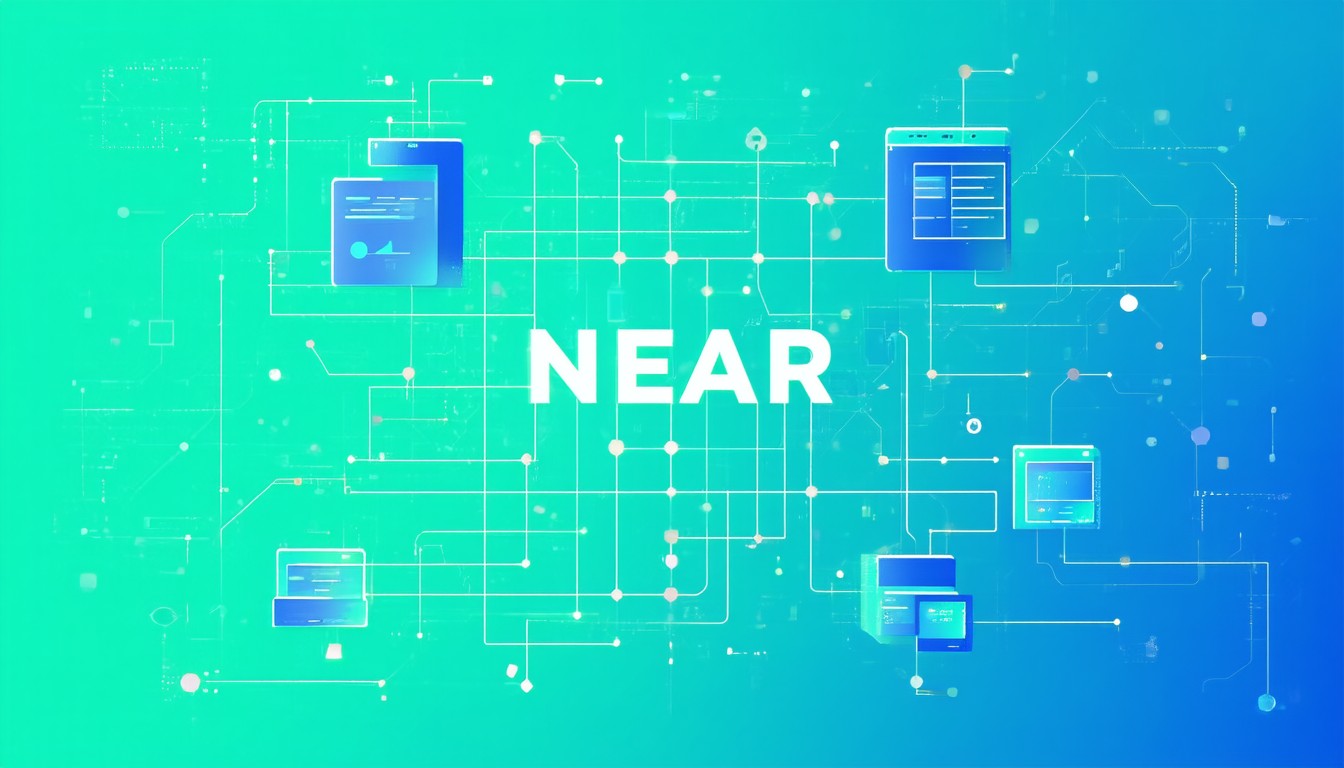
Blockchain technology continues to evolve at a breakneck pace, spawning a new wave of decentralized networks with ambitious visions. Among these, the NEAR blockchain has captured significant attention for its user-friendly focus, innovative sharding technology, and robust developer tools. Designed for open web and decentralized applications (dApps), NEAR positions itself as a permissionless, scalable layer-1 blockchain—offering answers to persistent bottlenecks in usability and performance within the wider Web3 ecosystem.
At its core, NEAR Network targets mass adoption by tackling major challenges: speed, low fees, onboarding simplicity, and sustainable scalability. With a growing base of users, developers, and ecosystem partners, NEAR has become a case study in how next-generation chains are blending technical breakthroughs with practical accessibility.
NEAR Blockchain Overview: Technology, Mission, and Ecosystem
Core Technology and Sharding Architecture
NEAR distinguishes itself through its implementation of Nightshade—a real-time sharding mechanism. Sharding is a method of splitting the network into smaller, parallel segments (shards), each capable of processing transactions and smart contracts independently. This means higher throughput and lower costs compared to monolithic blockchains.
In practice, NEAR’s Nightshade dynamically adapts the network’s processing power to meet demand, making it a strong candidate for handling surges in activity typical of mainstream apps. The proof-of-stake (PoS) mechanism ensures energy efficiency and democratized participation, with validators rewarded for honest work and community voting.
"By introducing sharding in a user-centric, developer-friendly way, NEAR provides scalability without sacrificing simplicity," notes blockchain researcher Sarah Wang.
Ecosystem and Developer Community
One pillar of NEAR’s adoption is its vibrant, incentivized developer ecosystem. NEAR offers a suite of open-source tools—including NEAR SDKs for Rust and AssemblyScript, a simple wallet, and top-tier documentation. The focus is to lower the technical barrier for smart contract development and onboarding.
The protocol’s ecosystem ranges from DeFi (ref.finance, Burrow) to NFTs (Paras, Mintbase), DAOs, social platforms, and gaming. These real-world buildups showcase NEAR’s versatility—backed by the NEAR Foundation's robust grants program and cross-chain initiatives such as Ethereum and Aurora bridges.
Beyond this, NEAR’s emphasis on usability surfaces in its wallet and onboarding process: users can create human-readable account names, abstracting away clunky hexadecimal addresses—a subtle but potent boost for broader user appeal.
Mission and Philosophy
NEAR’s broader mission is to build a more open, inclusive web. By supporting fast and low-cost transactions, composable dApps, and interoperability, NEAR aims to be the key infrastructure layer of the evolving decentralized digital economy.
Key Features and Innovations Driving NEAR’s Growth
Usability: Bridging Web2 and Web3
While many blockchains focus exclusively on protocol upgrades, NEAR invests heavily in end-user and developer experience. This includes:
- Simple onboarding: Social logins, email access, and familiar account recovery processes
- Readability: Account names that look more like domain names than wallet addresses
- Low, predictable fees: NEAR’s fee structure shields users from volatile gas price spikes common on older networks
These decisions reflect a larger industry trend—moving away from technical obscurity toward mainstream accessibility.
Nightshade Sharding: Scaling Without Sacrifice
Scaling remains a critical roadblock for layer-1 blockchains. NEAR’s dynamic sharding solution enables the network to process tens of thousands of transactions per second in theory, without compromising security or decentralization. In practice, the network’s capacity to split and merge shards aligns resources with demand, an approach shared by only a few elite chains like Polkadot and Ethereum (post-merge).
Sustainability and Environmental Efficiency
Proof-of-stake protocols like NEAR drastically reduce energy use compared to proof-of-work. NEAR’s design is particularly climate-conscious; the foundation claims the network is carbon neutral, offsetting its modest energy consumption through strategic partnerships. This environmental posture resonates with enterprises and users mindful of blockchain’s historical ecological impact.
Real-World Adoption: Projects and Partnerships
DeFi, NFTs, and Gaming on NEAR
NEAR’s ecosystem growth is visible through flagship applications:
- Ref Finance: A leading DeFi platform offering decentralized swapping, yield farming, and stablecoins.
- Paras & Mintbase: NFT marketplaces supporting artists and brands, where simple onboarding and cheap fees help lower the entry barrier.
- Aurora: An EVM-compatible layer on NEAR, enabling Ethereum assets and dApps to migrate easily.
Major brands and social DAOs have also begun launching pilot programs and exploring NEAR’s platform, drawn by rapid transaction speeds and developer-friendly APIs.
Interoperability and Bridging
A hallmark of NEAR’s approach is ecosystem interoperability. Through the Rainbow Bridge, NEAR enables fluid transfers of assets between Ethereum and NEAR, reducing friction for users and broadening dApp composability. This interoperability is a practical response to the industry’s need for cross-chain functionality, with NEAR acting as a conduit between disparate blockchains.
Governance, Security, and Community Engagement
Decentralized Governance
Governance on NEAR is steadily evolving. While the NEAR Foundation initially played a guiding role, the network is moving toward community-led protocol upgrades and decision-making. DAOs (Decentralized Autonomous Organizations) on NEAR facilitate democratic input over resource allocation and development priorities.
Security
Security is paramount for a public blockchain. NEAR employs layered security through its PoS consensus, formal verification options for smart contracts, and bug bounty programs. Transparent disclosure of vulnerabilities and rapid patching remain central to its trust strategy.
"The NEAR Network’s success hinges on continuous vigilance and transparent governance, which the team has consistently prioritized," says DeFi security analyst Marcus Li.
Community Initiatives
A range of hackathons, community grants, and education initiatives fuel NEAR’s grass-roots growth. The inclusive community onboarding, multilingual support, and global ambassador network have contributed to the platform’s international penetration.
Challenges and Competitive Landscape
Despite its technical strengths and growing ecosystem, NEAR faces stiff competition. Ethereum’s network effects, Solana’s speed, and Polygon’s interoperability all vie for dApp developers and users. Moreover, achieving true decentralization as the foundation cedes control is a non-trivial task.
Onboarding mainstream users remains a work in progress—though NEAR’s focus on wallet usability and cross-chain reach places it in a strong position to help Web3 reach broader audiences.
Conclusion: NEAR’s Place in the Future of Web3
NEAR has carved a distinctive niche among next-generation blockchains by emphasizing usability, effective scaling, and a pragmatic approach to sustainability. Its sharded architecture, developer-friendly tools, and focus on real-world adoption suggest it will remain a serious contender as blockchain matures beyond speculation toward practical, everyday applications. Continued ecosystem investment, transparent governance, and cross-chain expansion will determine how NEAR shapes the broader digital economy in the years ahead.
FAQs
What sets NEAR apart from other blockchains?
NEAR’s real-time sharding, human-readable accounts, and focus on low fees make it unique among layer-1 platforms. These features collectively improve scalability and user experience.
Is NEAR environmentally sustainable?
Yes, NEAR uses a proof-of-stake consensus mechanism and actively offsets its emissions, resulting in a carbon-neutral blockchain network.
Can developers build Ethereum-compatible dApps on NEAR?
Through Aurora, a built-in EVM layer, Ethereum developers can migrate dApps and assets to NEAR with minimal changes, leveraging its speed and lower transaction costs.
How does NEAR handle network congestion?
NEAR’s Nightshade sharding allows the network to process more transactions as usage grows, preventing the kinds of congestion and fee spikes seen on other networks.
What kinds of applications run on NEAR?
NEAR supports a diverse range of applications, including DeFi platforms, NFT marketplaces, games, and social networks—demonstrating broad real-world utility.
How does NEAR support new users and developers?
NEAR offers educational programs, development grants, and easy onboarding tools, making it accessible for non-technical users and experienced builders alike.










Leave a comment