


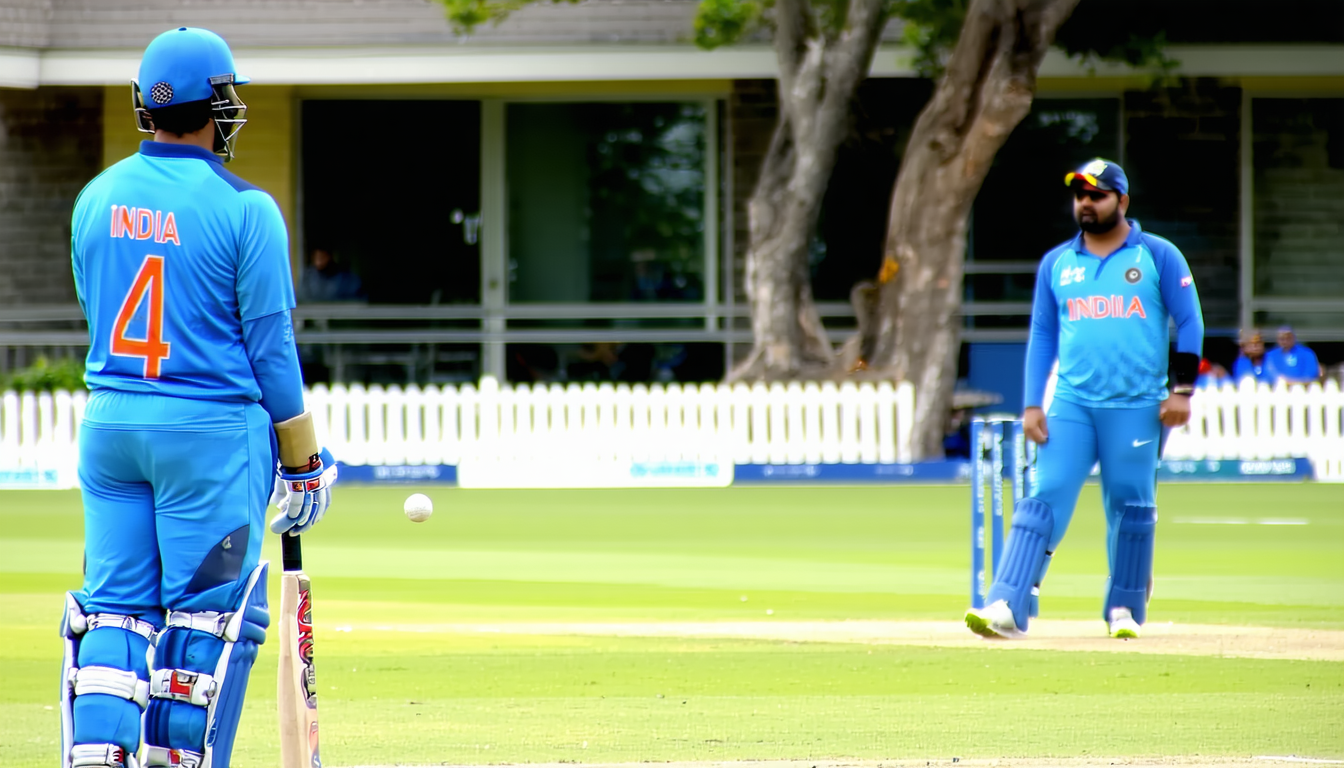
A riveting chapter in the storied cricket rivalry between India and Australia is currently unfolding in a high-stakes T20I series. With its eyes firmly set on the T20 World Cup preparation and the broader narrative of dominance, both teams are battling for momentum, pride, and strategic clarity.
Series Overview and Strategic Stakes
This five-match T20I series, played across iconic Australian venues, serves as more than just bilateral honors – it's a critical build-up to the ICC T20 World Cup 2026. According to India’s T20I captain Suryakumar Yadav, the series forms a foundational segment of their World Cup prep, testing squad balance and adaptability (khelnow.com).
So far, India hold an unassailable 2–1 lead, having clinched victory in the pivotal fourth T20I on November 6 at Carrara Oval, Gold Coast (theguardian.com). Beyond the result itself, this prolongs India's remarkable 17-year streak without losing a T20I series in Australia, indicating both consistency and psychological edge (outlookindia.com).
Player Performances & Tactical Dynamics
India
- Shubman Gill: Once struggling, he showed signs of life, top-scoring with 46 off 39 at Gold Coast. Still, questions about his consistency remain impactful (espn.com.au).
- All-round contributions: Axar Patel starred with both bat and ball, earning Player of the Match honors with a crucial 21* and tight spell (theguardian.com).
- Spin supremacy: Varun Chakravarthy, Washington Sundar, and Axar combined for six wickets in under 10 overs, exposing Australia’s vulnerability to quality spin (outlookindia.com).
- Bowling balance: Jasprit Bumrah and Arshdeep Singh have provided reliable new-ball options, while the spin troika offers tactical depth (outlookindia.com).
Australia
- Unsettled batting: Key players like Josh Inglis (33 runs in three innings) and Matt Short have struggled to build consistency. Inglis, especially, was undone by Axar Patel’s spin (espn.com.au).
- Fragile middle-order: Limited contributions beyond the top three have meant reliance on a narrow core of performers (outlookindia.com).
- Bowling concerns: The absence of veterans like Travis Head and Josh Hazlewood has left gaps. Less experienced bowlers like Ben Dwarshuis have failed to press the advantage (outlookindia.com).
“India have stuck to a similar squad combo like the South Africa series… Australia has similar conditions.”
— Suryakumar Yadav on the strategic continuity heading into the series
Venue Insights & Conditions
Carrara Oval (Gold Coast)
This ground, hosting its third men's T20I and the first since 2022, presents a unique challenge. Boundaries are moderate, offering batsmen opportunity while still aiding bowlers early on (indiatoday.in). Forecasts suggest favorable, sunny weather—an ideal backdrop for expansive cricket (indiatoday.in).
Other Venues & Their Significance
- Melbourne (MCG): Known for its pace and bounce, it's one of cricket's most demanding stadiums. Seamers like Hazlewood historically thrive here (outlookindia.com).
- Canberra (Manuka Oval): Offers lively bounce—fitting for players like Suryakumar Yadav who thrive on pace and movement (outlookindia.com).
- Hobart (Bellerive Oval): Known for swing and seam support, though the series’ match schedule there was weather-affected (cricketworld.com).
Series Narrative: Momentum, Adaptation, & Depth
India’s approach has been tactical yet experimental. Mixing reliable seniors with agile bench strength – like Arshdeep, Washington, and even Nitish Reddy – indicates an emphasis on depth (indiatoday.in). This blend of certainty and experimentation mirrors broader World Cup management philosophies.
Australia’s pattern, by contrast, shows instability due to missing experience. Adaptation to spin remains a glaring issue. However, they still possess the firepower—Marsh, David, and Maxwell at full health could shift dynamics (outlookindia.com).
Strategic Implications & Final Match Stakes
- India: A win in the fifth T20I in Brisbane would seal the series—solidifying confidence and reinforcing selection decisions ahead of the World Cup.
- Australia: Defeat would mean introspection. Their batting frailties and spin inexperience would require urgent correction, particularly if Ashes involvement (Tests) demands focus.
Conclusion & Key Insights
The India vs Australia T20I series is emerging as more than bilateral competition—it's a performance mirror.
- India’s spin dominance and bench confidence suit the demands of big tournaments.
- Australia’s batting weaknesses and bowling gaps need quick resolution.
- The venues have offered varied conditions—testing both adaptability and skill balance.
- Ultimately, India’s current lead signals not only form but foresight in long-term team planning.
With the final match in Brisbane looming, both sides have clear directives: India to consolidate, Australia to regroup. The stakes? Momentum heading into the T20 World Cup 2026—a defining stage where today's tests become tomorrow’s legends.
FAQ (if needed)










Leave a comment