


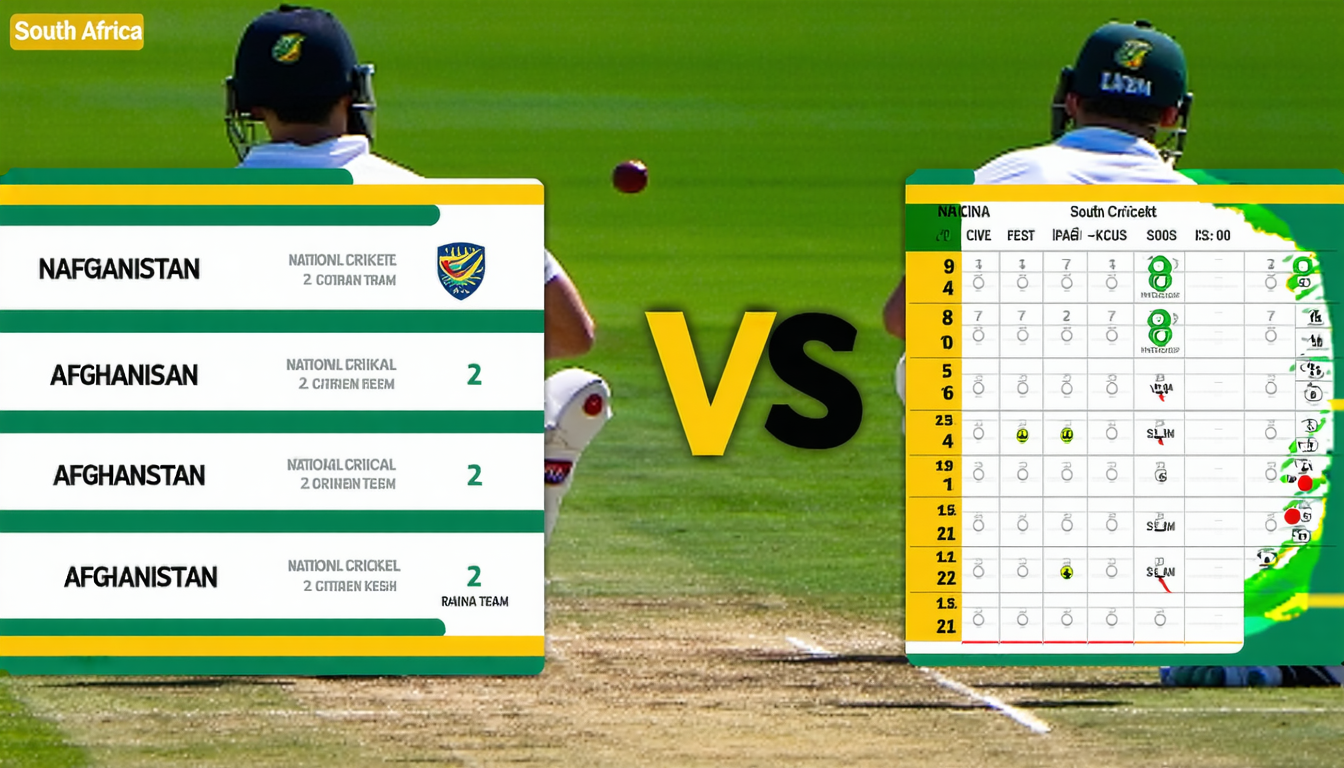
The recent face-offs between the South Africa national cricket team and the Afghanistan national cricket team have featured two high-stakes matches: a dominant ODI at the ICC Champions Trophy in February 2025, and a emphatic T20 semi-final clash during the T20 World Cup in June 2024. These contests showcase distinct narratives—from one-sided performances to breakout individual brilliance.
ICC Champions Trophy 2025: South Africa’s Clincher
Match Summary: ODI Thriller in Karachi
In the group-stage fixture on February 21, 2025, South Africa charted a commanding path to victory over Afghanistan, winning by a massive 107 runs (espn.com). The Proteas posted a substantial total of 315/6 in their 50 overs, flanked by several standout individual efforts.
Key Performances & Turning Points
- Ryan Rickelton delivered a maiden ODI century (103 off 106 balls), setting the tone for South Africa’s imposing total (espn.com).
- Half-centuries from Temba Bavuma, Rassie van der Dussen, and Aiden Markram added crucial depth to the batting lineup (espn.com).
- Afghanistan’s chase was anchored predominantly by Rahmat Shah, who fought back with a valiant 90, yet could not fend off the relentless South African attack (espn.com).
- The bowlers shared the spoils: Kagiso Rabada claimed three wickets, Lungi Ngidi and Wiaan Mulder chipped in with two apiece, while Marco Jansen and Keshav Maharaj picked up one wicket each (espn.com).
Tactical Insights & Match Flow
South Africa’s strategy focused on building a formidable total and applying disciplined bowling pressure. Despite Rahmat Shah’s resistance, Afghanistan’s batting lineup lacked sustained support, leading to a steep collapse. South Africa’s bowlers executed a neat plan—stifle, strike, and maintain control. The match unfolded as a textbook example of how collective performance outpaces solitary efforts.
T20 World Cup 2024 Semi-Final: A Swift South African Sweep
Match Highlights: Semi-Final Statement
On June 26, 2024, in Trinidad, South Africa overpowered Afghanistan in a drainage-shortened T20 semifinal, winning by a staggering nine wickets with 67 balls to spare (espn.com). Afghanistan folded for just 56 in 11.5 overs—one of their lowest totals in T20 internationals (theguardian.com).
Star Players & Decisive Moments
- Marco Jansen was named Player of the Match, claiming 3/16 and setting the tone early (espn.com).
- Support came promptly from bowlers like Kagiso Rabada, Tabraiz Shamsi, and Anrich Nortje, who maintained pressure from one end (theguardian.com).
- South Africa’s chase was swift—completed in just 8.5 overs—supported by innings from Reeza Hendricks and Aiden Markram (theguardian.com).
Implied Narrative & Momentum
This match underlined South Africa’s dominance in short forms—crushing both with the ball and the bat. The low total highlighted Afghanistan’s struggles under pressure and South Africa’s ability to capitalize ruthlessly. It was less a close contest and more a statement of intent.
Analytical Synthesis: Patterns, Contrasts, and Takeaways
Consistent Themes
- South Africa’s batting depth shines across formats (Rickelton in ODIs, top-order assault in T20s).
- Bowling units are dynamic and adaptable—pace and spin utilized wisely in both formats.
- Afghanistan showed flashes—Rahmat Shah’s innings, periods of resistance—but struggled to build partnerships under duress.
Contrasts in Format Execution
- The ODI showcased South Africa pacing innings tactically, batting through 50 overs, applying pressure, and conserving wickets.
- The T20 semi-final was a blitzkrieg—quick, unforgiving, and reflective of ultra-modern T20 aggression.
Strategic Implications Moving Forward
- For South Africa: Maintain this balance of aggressive intent and composure. Their multi-pronged attacks and flexible batting order give them an edge in global events.
- For Afghanistan: Need collective responsibility—shore up the middle order, deepen batting resilience, and build a varied bowling unit to handle high-pressure situations.
Concluding Summary
The clashes between South Africa and Afghanistan across these major tournaments reveal a strong Proteas side executing their game plans with both finesse and ferocity. In the ODI, dynamic batting powered a mammoth score, while bowling discipline ensured a lopsided win. In the T20 format, bowling aggression and batting ruthlessness sealed an early yet comprehensive victory.
These results underline a strategic blueprint: build deep, pressure consistently, and capitalize decisively. For Afghanistan, the lessons are clear—raise their middle-order game, collaborate more steadfastly, and adapt to high-stakes environments with consistent execution.
FAQ
What were the standout individual performances?
- ODI: Ryan Rickelton’s maiden century (103), Rahmat Shah’s 90, and Rabada’s three-wicket haul.
- T20 Semi: Marco Jansen’s 3/16 and rapid batting by Hendricks and Markram.
How did the results impact tournament progress?
- South Africa won their group match decisively in the Champions Trophy, boosting confidence and net run rate.
- The T20 semi-final win propelled South Africa into their first-ever T20 World Cup final, marking their strongest showing in the format.
Where can Afghanistan focus improvement?
They must cultivate deeper batting resilience and nurture partnerships that sustain pressure—particularly under South Africa’s assaultive and disciplined approach.










Leave a comment