


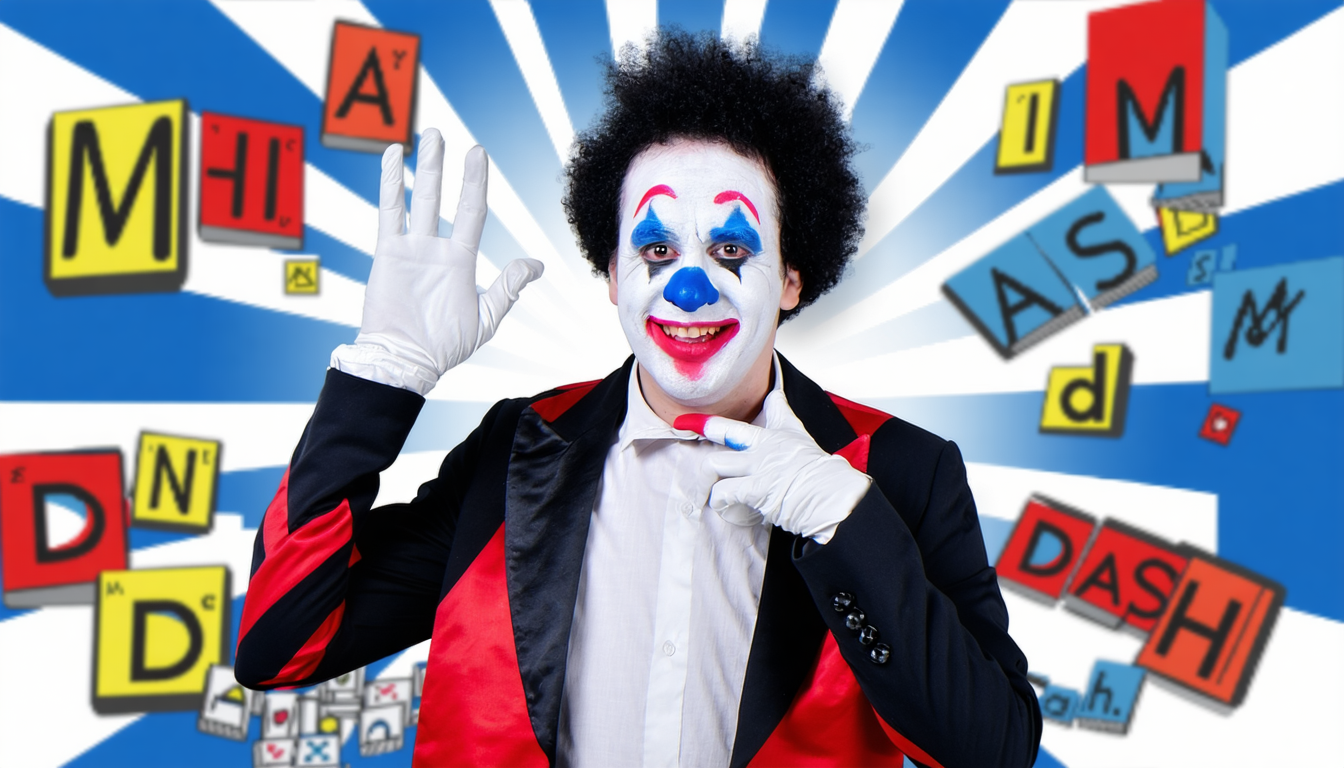
Mime and Dash is a delightfully quirky word game that’s been quietly gaining traction among language lovers and casual gamers. Picture this: two friends—one silently miming while the other races to guess gibberish-like phrases (“Dash”)—and you’ve got the core mechanic. It’s simple, but surprisingly addictive. Over the past year or so, this social game has found a home at parties, digital meetups, and even in educational settings as a fun, fast-paced way to boost vocabulary and laughter alike.
The playful tug-of-war between pantomime and speedy guessing creates an unexpected spark. In a world filled with polished, high-budget games, Mime and Dash feels delightfully human—imperfect glares, wild gestures, and belly laughs. And that raw energy? It’s exactly the kind of unpredictable, charmingly imperfect vibe that keeps people talking.
Game Basics: How Mime and Dash Works
Setting Up the Game
To get started, a small group is ideal—three to six people hits the sweet spot. One player (the “Mime“) draws a random phrase—either physically from a pool of custom-designed cards or digitally via a simple app—and acts it silently. The others (the “Dashers“) shout guesses, trying to match what's being pantomimed. The first person to guess correctly wins that round, and players rotate roles.
It’s practically a high-stakes relay in playful disguise. That rapid exchange, the improvised gestures, the near-misses—these are the moments that turn it from a game into a micro-theater event among friends.
Why It Resonates with Players
Mime and Dash taps into very primal, intuitive pleasures. Communication stripped to pantomime emphasizes shared understanding without words, which can, ironically, spark loudest laughter. On the other side, the chaos of fast guessing—“Is that a bird? A trophy? Cooking?”—adds suspense and unpredictability. Many players recount belly laughs so uproarious that a round has to pause just to calm down.
“There’s something uniquely satisfying when someone nails your wildest mime in three seconds flat—or spectacularly dashes past it,” one longtime player wryly commented.
Social Dynamics and Educational Value
Building Connections Through Play
Beyond being a pure laugh-generator, Mime and Dash offers subtle social value. It thrives on shared context—inside jokes, cultural references, personal quirks—all of which make miming richer, and guessing more insightful. These dynamics build empathy, reinforce group bonding, and often surface new in-jokes that outlast the game itself.
A Tool for Learning and Language Development
Educators have started experimenting with Mime and Dash as an impromptu language-learning tool or vocabulary booster. The pressure to convey meaning non-verbally forces learners to think metaphorically and flexibly about word meanings. Even without precise stats, it’s clear that many teachers find the format refreshingly low-cost and engaging for mixed-ability groups.
Evolving Trends and Creative Twists
Digital Adaptations and Hybrid Versions
Alongside in-person sessions, people have begun crafting digital versions—via video calls or social media filters—that help remote friends or family play together. Some apps even overlay simple doodle-based clues to help or hinder guessing. These hybrid adaptations are unofficial but growing in popularity among remote-first friend groups and online content creators.
Spin-Off Themes and Group Variations
Game nights have embraced themed versions:
- Movie nights: Mime only movie titles or famous scenes.
- Career-themed rounds: Acting out professions (“chef,” “astronaut”) in teams.
- Speed Blitz rounds: Super-short timers for ultra-fast guessing.
These variations keep the format fresh and inclusive for different group dynamics, especially in mixed-age or cross-cultural gatherings.
Human Unpredictability: Real-World Anecdotes
A Mini-Drama at a Dinner Party
At a recent friend gathering, someone attempted to mime “spaghetti western.” The Mime pointed fingers like pistols, then stomped an invisible horse—somehow, the group guessed “cowboy ride” before finally landing on the intended phrase. Cue five minutes of storytelling over who gestured what and why spaghetti even came into mind. That’s the kind of laughter that lingers well into dessert.
Classroom Experiment
An English teacher once tried Mime and Dash in a language class with mixed-level students. She hand-picked vocabulary words from recent lessons, and noticed the class animatedly discussing which gestures might convey “melancholy” versus “elated.” Even the shyest student chipped in with pantomime suggestions. It became a bridge between hesitation and participation that standard drills rarely achieve.
Pros, Cons, and Expert Insight
Why Title “Mime and Dash” Works
- Catchy and alliterative—rolls off the tongue easily.
- Descriptive—captures the essence of the game in two short words.
- Versatile—sets a tone that’s playful yet adaptable.
Potential Limitations
- Not all phrases translate cleanly into gesture—they can lead to confusion or stalled rounds.
- Some participants may feel self-conscious miming in front of groups, especially large or unfamiliar ones.
- Over-reliance on inside jokes or cultural references may limit its appeal in more diverse settings.
Expert Perspective
“Games like Mime and Dash stand out because they channel spontaneous collaboration. It’s less about winning and more about insight—it’s gesturing toward someone else’s thought.”
This insight, from a game design observer following emerging social dynamics in casual gaming, captures why this simple format clicks—it’s about the empathy and swift mental leaps, as much as the laughter.
Concluding Summary: Why Mime and Dash Matters
Mime and Dash may seem like just another party game, but it’s unexpectedly multifaceted. It brings people together through physical play, shared creativity, and quick thinking. Whether in an informal friend circle, a lively classroom, or a remote game night, its charm lies in the rawness—the mis-gestures, the wild guesses, the unexpected clarity. It’s imperfect, unpredictable, and therefore scalably human.
For those looking to host a memorable game night, encourage impromptu school sessions, or simply inject genuine laughter into remote get-togethers, Mime and Dash is a quietly powerful tool. Try it once—and you’ll likely find yourself returning, phrase after phrase, for the next round of wordless discovery.
That wraps up the core of the guide—enjoy the gestures, relish the guessing, and may your next Mime and Dash round be gloriously glorified in giggles.










Leave a comment