




- South Africa’s crypto regulation advanced as authorities released draft cross-border transaction rules to strengthen oversight of crypto activities.
- The manual draft is built on South Africa’s earlier capital flow management proposal.
- The move comes as crypto use expands in the country, with banks exploring ways to develop crypto products for institutional clients.
As the digital asset industry expands, governments are working to integrate cryptos into traditional financial systems. They are also introducing clearer crypto regulation to strengthen oversight.
South Africa, with growing retail adoption, has advanced its regulatory framework. Triple-A’s research found that the country has over 6 million cryptocurrency users. The same research shows that most cryptocurrency owners belong to low- and middle-income groups.
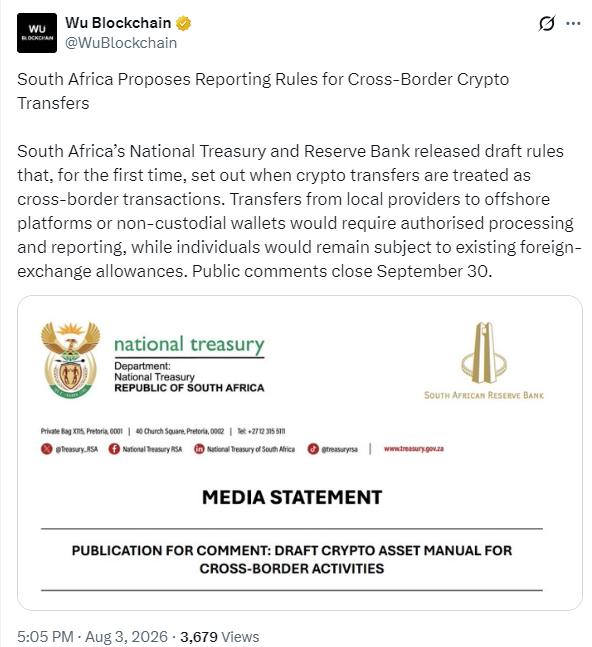
The South African Department of Finance and the South African Reserve Bank have jointly published a draft of the Crypto Asset Manual. The draft sets out when cross-border crypto transactions are subject to regulation and reporting requirements.
South Africa’s New Cross-Border Crypto Regulation
As per the draft, users will have to use licensed service providers to facilitate cross-border crypto asset transfers. The transactions will be reported to the South African Reserve Bank’s Department of Financial Surveillance (FinSurv).
FinSurv is in charge of enforcing and regulating exchange control policies and monitoring financial services in the country.
The framework clarifies that domestic crypto activity, such as burning or selling digital assets through an authorized provider, will not be considered a cross-border event.
This draft allows individuals to move crypto assets only within the country’s existing foreign currency controls. The South African Reserve Bank has also stated that the framework does not approve crypto assets as a legal currency. Research into how digital assets should be regulated as a distinct category is still in progress.
The new crypto regulation aims to establish strong oversight of cryptocurrencies to prevent evasion of foreign exchange measures and block illicit capital flows.
How the New Framework Builds on South Africa’s Capital Flow Rules
The new crypto regulations align with the country’s Capital Flow Management regulations draft issued in April 2026. That draft aims to modernize and establish a regulatory framework for capital flows, monitoring how money moves in and out of South Africa.
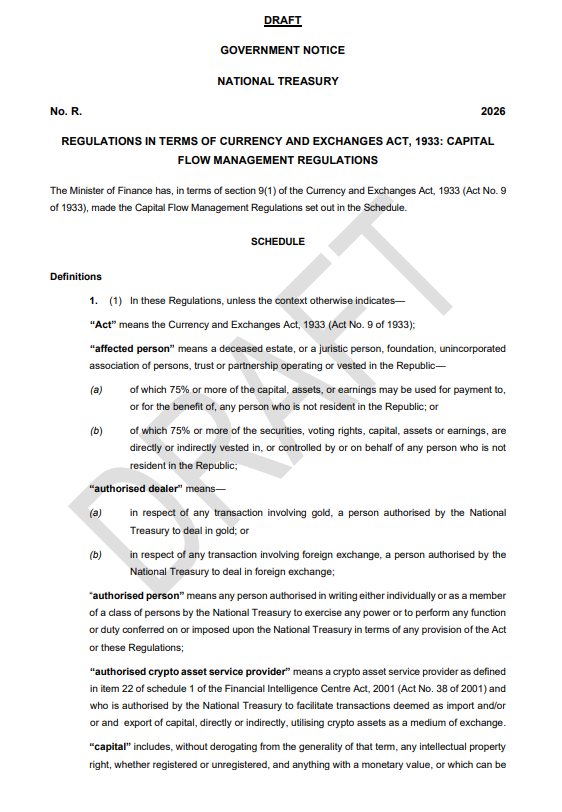
The main objectives of the capital flow draft are to monitor cross-border transfers, prevent illicit financial activities, and enhance financial stability.
Previously, South Africa followed the Exchange Control Regulations released back in 1961. The rules imposed strict controls on foreign exchange transactions and capital flow.
The government has gradually shifted towards modernizing the existing framework to make it more transparent and to align it with global financial standards. The new capital flow draft released in April addresses these improvements while allowing innovation in the country.
South Africa’s new cross-border crypto regulations extend the existing capital flow management measures to digital assets. Authorities aim to ensure crypto transfers do not become a means of moving funds outside regulated financial control.
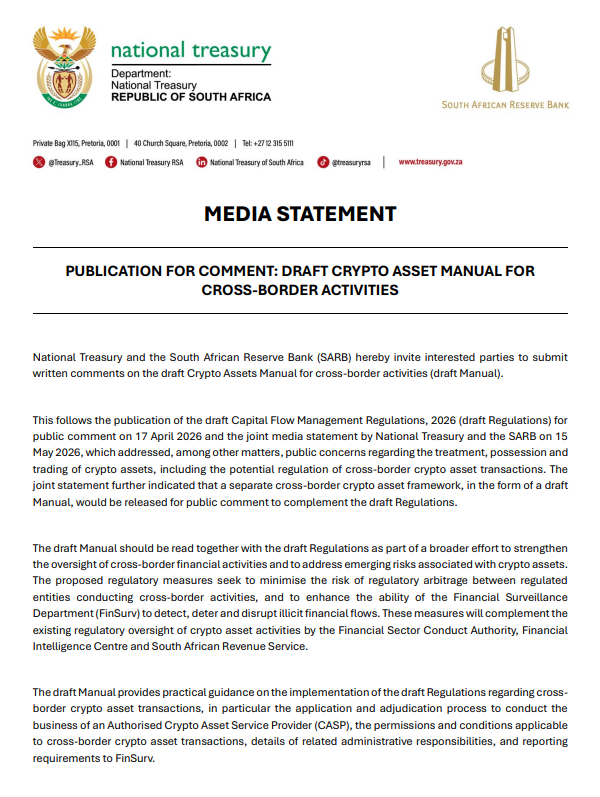
Alongside the proposed framework, the National Treasury has also opened a public feedback window. SARB and National Treasury have invited “interested parties to submit written comments on the draft Crypto Assets Manual for cross-border activities”.
Public comments will remain open till September 30, 2026. The feedback will help refine the final crypto regulation before implementation.